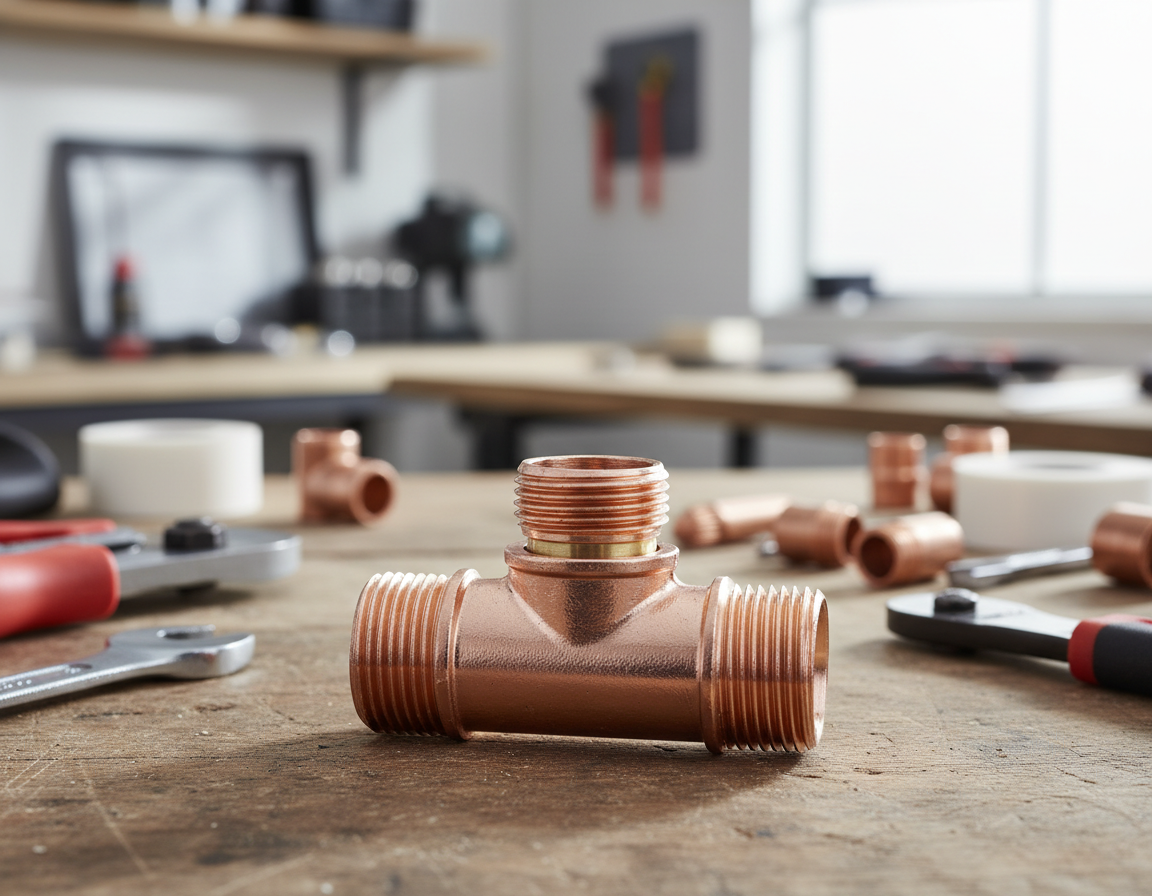
Solving Water Pressure Issues With A 1/2 To 1/4 Tee Brass Forged

Brass Forged Compression Tee For Long-Term Plumbing Reliability

A brass forged compression tee is a trusted plumbing fitting for many systems. It splits or joins fluid lines, creating a leak-resistant mechanical connection without soldering. Functioning as both a plumbing tee and pipe connector, it delivers a secure alternative for fast serviceability and tight sealing. This capability is essential in residential plumbing, HVAC, refrigeration, and numerous industrial fluid systems.

Brass—an alloy of copper and zinc—is widely appreciated for its corrosion resistance, mechanical strength, malleability, and versatility. These characteristics make a 1/2 to 1/4 tee ideal for transporting potable water, refrigerants, and other media where durability is critical. A brass forged compression tee combines brass’s material benefits with forging’s structural advantages for a longer service life.

The term “forged” describes a process where heated brass is compressed under high pressure inside a die. As a result, it yields dense, high-strength parts with refined grain structure and fewer voids than typical cast fittings. Forged brass tee components typically provide better dimensional accuracy, higher strength, and greater resistance to fatigue. Together, these attributes help build confidence in pressure-sensitive plumbing systems.

In the United States, for potable water applications, lead-free materials are critical. The Reduction of Lead in Drinking Water Act sets a limit of 0.25% lead by weight on wetted surfaces. Look for lead-free markings such as LF and certifications like NSF/ANSI 61/372 to ensure a brass compression tee meets regulatory requirements for drinking water systems.

This article will cover the benefits of forged brass, product specifics for Compression Tee – Brass Forged fittings, installation and maintenance best practices, sizing and compatibility guidance, wholesale sourcing and specification resources, and a concise conclusion. This will help you select the right plumbing fitting for your project.

1/2 compression tee

  • Brass forged compression tees deliver leak-resistant connections without the need for soldering.
  • With corrosion resistance and malleability, brass is suitable for a wide variety of plumbing uses.
  • Compared to casting, forging generally yields stronger and more reliable fittings.
  • Lead-free markings (LF) and NSF/ANSI 61/372 indicate potable water compliance.
  • They are suitable for residential plumbing, HVAC, refrigeration, and numerous industrial systems.

Why Choose Brass Forged Fittings for Plumbing Systems

Brass forged fittings bring significant advantages to plumbing projects. They combine the inherent properties of brass with advanced manufacturing techniques. This synergy enhances performance, ensuring plumbing systems are reliable and cost-effective in the long run.

Corrosion Resistance And Long-Term Service

Brass offers strong resistance to corrosion caused by water and a variety of fluids. This property prevents leaks and pinholes in systems handling potable water. Because of this resistance, brass fittings have a longer lifespan and are suitable for both residential and commercial applications.

Forged brass parts typically have lower porosity than comparable cast fittings. Their denser metal and finer grain structure reduce the risk of surface degradation and wear. As a result, forged brass fittings are more durable over time.

Strength and durability from forging

Forging compresses the metal grain, increasing tensile strength and impact resistance. Thanks to this improved structure, brass fittings can handle higher pressures in plumbing, HVAC, and refrigeration systems. These fittings deliver superior mechanical strength.

In comparison with cast fittings, forged pieces tend to show better dimensional accuracy and fewer defects. The result is fewer field failures and tighter fits during installation. This precision in forged brass tee components benefits a wide range of plumbing projects.

Lead-Free Compliance For Potable Water

Within the U.S., plumbing codes mandate lead-free brass fittings for use in drinking water systems. These fittings must meet the Reduction of Lead in Drinking Water Act standards. They are marked with LF or certified to NSF/ANSI standards.

Choosing lead-free forged brass tee components ensures safety in homes, schools, and hospitals. Doing so also maintains plumbing reliability wherever potable water is involved.

Compression Tee – Brass Forged

A forged compression tee is a compact three-way fitting designed to join three tubing runs using compression nuts and ferrules. This design delivers a mechanical seal without soldering or flaring, making it ideal for quick, reliable connections. Common labels include 1/4 compression tee and 1/2 compression tee. There are also mixed sizes, such as 1/2×1/2×3/8 tee, for branch routing.

Product overview and common configurations

Compression tees are offered in several forms, including run tees, branch tees, and union tees. A brass compression tee is often a forged male run tee. It combines compression ends with NPTF threads for hybrid systems. For smaller water lines, standard options include the 1/4 water line tee and 1/4 t fitting. Installers also search for 1/2 t and 1/2 inch t when upsizing or tying into mains.

Materials And Standards

Forged tees rely on brass alloys due to their machinability, strength, and corrosion resistance. These alloys meet ASME and SAE criteria, common in plumbing supply chains. Each fitting has three parts: a compression nut, ferrule or sleeve, and fitting body. Depending on the tubing material, ferrules can be brass or thermoplastic.

Manufacturers provide temperature and pressure ratings based on tubing type and configuration. Standards such as SAE J-512 and UL listings help ensure proper performance in potable water, refrigeration, and other fluid systems. Always verify the exact ratings for any brass compression tee before putting it into service.

Applications where forged compression tees excel

These forged compression tees are particularly effective in potable water distribution, refrigeration, and ice-maker hookups. They are also commonly used in beverage equipment, HVAC instrumentation, and low- to medium-pressure pneumatic runs. The 1/4 compression tee and 1/4 water line tee are common in appliance connections. For larger branch circuits, the 1/2 compression tee and 1/2×1/2×3/8 tee are often selected.

They are well suited to situations that demand mechanical robustness and leak resistance without the use of heat. They are also helpful where limited disassembly is anticipated, but ferrules may degrade after many reassemblies. Choose brass compression tee variants for corrosion resistance and lead-free compliance in potable systems.

Feature Example Size Typical Application Material / Notes
Small appliance branch 1/4 in. Compression Tee Ice makers, refrigerators Brass ferrule or acetal for plastic tubing
Main Branch/Manifold 1/2 in. Compression Tee Hot and cold supply lines, distribution manifolds Forged brass body for higher strength
Branch With Mixed Sizes 1/2×1/2×3/8 Tee Transitioning between different circuit sizes Common in instrumentation and HVAC
Compact tee with thread 1/4 T fitting, male-run Used for hybrid compression-to-thread connections Ideal where mixed plumbing assemblies are used
Robust forged option Compression Tee – Brass Forged Used in applications requiring high durability Meets functional requirements under SAE and ASME standards

Installation And Best Practices For Compression Tees

Correct installation is crucial if you want to avoid leaks and reduce frequent service calls. Assembling a compression fitting correctly ensures tight and reliable plumbing. Below, we’ll discuss the essential components, compatibility, and maintenance for common setups.

Components And Assembly Steps

A standard compression fitting is made up of a nut, a sleeve or ferrule, and the fitting body. Start by placing the nut on the tubing and then installing the ferrule, with the nut threads directed outward. Push the tube fully in until it seats against the fitting shoulder.

Hand-tighten the nut first, then apply the specified wrench turns according to the manufacturer’s instructions. Following the recommended nut rotation counts is important to avoid overcompressing the ferrule. This method prevents damage to the fitting.

For mixed-thread connections like compression x NPTF, apply thread sealant or PTFE tape only on the male tapered threads. Avoid applying sealant on the compression ends. Long-nut designs can increase vibration resistance and suit moving equipment or noisy lines.

When installing a compression t fitting, make sure the tubing ends are square and free of burrs. This helps ensure a consistent and reliable seal.

Compatibility With Tubing Types And Sizes

Compression fittings are suitable for annealed copper, aluminum, and many thermoplastic tubes. When working with plastic tubing, you may need an internal insert or acetal sleeve to prevent collapse and secure a proper seal. Always check manufacturer guidance for compatible inserts, such as those in Dixon-style product series for plastic lines.

Do not assume a pipe connector labeled with shorthand will match without checking O.D. versus port size. Cross-reference common search labels like 1/4 t fitting, 1/2 compression tee, 1/4 compression tee, 1 1 4 compression tee, and multi-size labels such as 1/2×1/2×3/8 to confirm fit. Steel tubing often needs fittings rated specifically for steel; do not use standard compression tees on steel unless the specification explicitly approves it.

Maintenance And Reassembly Considerations

Compression fittings can be taken apart and reused a limited number of times. Before reassembling, inspect ferrules and nuts for deformation, scoring, or thread wear. After repeated servicing, replace ferrules and, if required, the fitting body to keep the joint leak-free.

Avoid overtightening the fitting during service. If the sleeve is overcompressed, it will deform and compromise the seal. In systems with vibration or movement, using long-nut options, union-style connectors, or specialized dynamic fittings can help reduce maintenance frequency.

Sizing, Compatibility, And Common Search Terms Explained

A clear understanding of fitting labels saves time and helps prevent costly errors. Markings for size might indicate tube O.D., NPT thread size, or shorthand labels like 1/2×1/2×3/8 tee. Confirm whether a listing means tube O.D. or thread form when you see notations such as 1 1 4 compression tee or 1/2 inch t.

Cross-reference part numbers with the printed dimension tables. You may see manufacturers specify tolerances of +/- .02 in on critical dimensions. Call the manufacturer when dimensions are critical to ensure proper fit and tight clearances around a pipe tee or hydraulic fitting.

Interpreting size labels and cross-references

Look for clear labels that indicate whether the value refers to tube O.D. or thread size. A 1/4 t fitting might be listed as 1/4 in. Tube O.D. or as 1/4 NPT. Listings that mix formats can confuse buyers. Use the dimension table and confirm ferrule size when shopping for a 1/2 to 1/4 tee.

Choosing the right compression fitting for pressure and media

Choose fittings that match your system pressure rating at the operating temperature. Most pressure tables reference 73°F. Forged brass items work well for low to medium pressure lines. If using refrigerants or certain gases, check manufacturer notes because some products may not be recommended for gaseous media.

Always confirm material compatibility with the fluid in your system. Brass is suitable for water systems and many hydraulic fluids. If you need potable water compliance, look for NSF/ANSI lead-free certification in the listing. When your design calls for a 1/2×1/2×3/8 tee or a 1/2 inch t, confirm the working pressure and certification before ordering.

Common compatibility pitfalls

Mismatched tubing O.D. and port size cause leaks. Plastic tubing may require inserts or special ferrules. Many products exclude steel tubing unless compatibility is clearly specified. Do not assume that a 1/4 t fitting fits every 1/4 tube; confirm whether the measurement is O.D. or thread.

Overtightening will deform ferrules and lead to failures. If the nut is under-tightened, it may cause weeping and slow leaks. Follow the manufacturer-specified wrench turns for a secure seal. In high-vibration settings, choose designs with long nuts or vibration-rated options.

Pay attention to lead content in forged fittings. Certain forged run tees may not be lead-free. Read product notes and spec sheets before installing any pipe tee in potable systems. If a hydraulic fitting is used in a critical circuit, consult the manufacturer to verify pressure rating, media limits, and dimensional tolerances.

Where To Buy Wholesale And Specification Resources

Securing brass forged compression tee products requires trusted distributors and detailed spec documents. Opt for suppliers known for consistent quality, correct alloy markings, and suitable sizes. A thorough product data sheet streamlines the selection and installation process.

Wholesale Distributor Recommendation

When placing bulk orders, Installation Parts Supply is often a top option. They offer a broad selection, from 1/4 compression tee to 1/2×1/2×3/8 tee and 1/4 water line tee. Purchasing in bulk from a reputable source shortens lead times and helps maintain consistent pricing for contractors and facilities teams.

What to look for in product listings and data sheets

Carefully examine the product data sheet for alloy designation, lead-free certification, and key dimensional tolerances. Make sure the sheet lists NSF/ANSI 61/372 markings, the working pressure at 73°F, and temperature limits from -65°F to +250°F.

Verify configuration details such as compression x compression, compression x NPTF, or other combinations. Check whether the part is barstock, light pattern, or full pattern; catalog suffixes may indicate “B” or “L.” Also confirm if plastic tubing needs acetal sleeves or brass inserts and whether they come included.

Look for application notes like “Not recommended for gaseous media” along with vibration guidance such as using a long nut for greater vibration resistance. Such details can have a major impact on the long-term performance of a brass forged compression tee.

Example Manufacturers And Specification Resources

Manufacturers such as Dixon Brass offer detailed guidance on materials and configurations. Their documentation lists alloy numbers such as Alloy 360/230 for straight fittings and Alloy 377 for forged shapes. Typical series include 60C sleeves, 61C nuts, 62C unions, and 171C male run tee.

When you are considering a wholesale purchase, ask the supplier for manufacturer product data sheets and working pressure tables. Many vendors publish PDF spec sheets with part numbers, pressure ratings, temperature limits, and installation notes. It’s essential to cross-check these sheets before making large orders.

Item Key Spec To Verify Why it Matters
Brass forged compression tee Alloy designation, lead-free certification, and pattern type Ensures compatibility with potable water and confirms expected strength
Wholesale brass tee catalog entries Available sizes, packaging quantity, price breaks Helps keep procurement within budget and meets project quantity requirements
Compression Tee Wholesale Orders Working pressure at 73°F, temperature limits, and dimensional tolerances Prevents selection mistakes that may cause leaks or system failures
Support from plumbing fitting distributor Inventory levels, technical documentation, and channels for custom requests Makes replacement, traceability, and custom-order handling easier
Example manufacturer specification resources Part series, application notes, contact info Delivers authoritative instructions for installation and ongoing maintenance

Prior to purchasing, reach out to the supplier or manufacturer if you need clarification. Ask for current product data sheet PDFs and confirm that the exact brass forged compression tee model you require is available. Taking these steps minimizes risk and helps keep installations on schedule.

Summary

A brass forged compression tee provides a robust, leak-resistant, and code-compliant option for tubing connections in many different systems. When chosen correctly, it provides reliable service and helps extend plumbing system life. The right material, size, and configuration are key to its success.

Opt for forged brass for superior strength and durability. Forged brass resists deformation and holds thread integrity better than typical cast options. For safe potable installations, verify lead-free certification and follow the manufacturer’s installation instructions. Avoid common mistakes such as size mismatches, overtightening, or using incompatible tubing.

When buying wholesale, consider trusted distributors like Installation Parts Supply. Review manufacturer datasheets, such as Dixon Brass specifications, for detailed information on alloys, pressure ratings, and dimensional tolerances. Proper selection and maintenance of a pipe connector are essential for optimal performance and cost savings.

Posted in Food & Restaurants | Comments Off on Solving Water Pressure Issues With A 1/2 To 1/4 Tee Brass Forged

When You Need A Flare To Compression Adapter For Compatibility

Complete Guide To Flaring 3/8 Copper Tubing

Surprisingly, over 40% of leaks in HVAC work can be traced back to bad flare joints instead of faulty fittings. These are issues that proper technique can completely avoid. This guide is designed to show you how to correctly flare 3/8 copper tubing so your connections stay reliable and easy to service.

In plumbing and HVAC work, 3/8″ OD copper is common, and this guide compares flare joints with soldering and brazing methods. You’ll also see why 3/8 copper tubing flare fittings plus 3/8 flare to 3/8 compression adapters often make the most practical choice. Whether you’re a DIYer, plumber, or HVAC technician in the U.S., this article offers practical, code-compliant guidance on forming copper tubing flare joints.

In this brief yet detailed guide, you’ll follow the flaring process step by step, with notes on the right tools, materials, and standards such as SAE J533 and NFPA 54/ANSI Z223.1. You’ll see a clear procedure, troubleshooting pointers, and buying sources such as Installation Parts Supply for wholesale fittings and tools.

3/8 copper tubing flare fittings

  • How To Flare 3/8 Copper Tubing is essential for removable, flame-free connections in many HVAC and plumbing jobs.
  • Rely on correct 3/8 copper tubing flare fittings and code-approved brass parts to stay compliant and reduce corrosion risk.
  • A step by step copper tubing flaring guide reduces leaks: cutting square, deburring, and forming a 45° flare are critical.
  • Be sure you know when flare joints are better than solder or braze joints, particularly for serviceable runs or gas piping.
  • Refer to SAE J533 and check the AHJ per NFPA 54/ANSI Z223.1 before final installation.

Importance of Flaring 3/8 Copper Tubing for Plumbing & HVAC

When soldering isn’t practical, flaring 3/8 copper tubing provides a dependable sealing method. It enables working without an open flame, enhancing safety. Using flares can also speed up repairs and equipment replacement.

Situations Where Flare Joints Are Better Than Soldering Or Brazing

Choose flare joints in situations where a flame is dangerous, including finished interiors or around combustible materials. Flare connections provide a dependable, yet removable, link for appliances and service piping. This makes flares a robust alternative to soldered or brazed joints on thin tubing.

Applications: Water Service, Fuel Gas, Refrigeration & HVAC

Flared connections are commonly used in water service, including meter and main tie-ins, and refrigeration service lines. They’re also found in appliance feeds like ice makers. Single 45° flares satisfy many fuel gas codes for propane and natural gas, making it easier to connect small-diameter tubing. Flares are frequently paired with adapters—like a 3/8 flare to 3/8 compression adapter—to transition between fitting types.

NFPA 54/ANSI Z223.1, Code Checks, and Safety

Under the National Fuel Gas Code NFPA 54/ANSI Z223.1, 45° flared brass fittings are permitted for gas services. Even so, always check with your local authority for any additional rules before starting. By using approved brass fittings to limit corrosion and following copper flare joint rules, you help ensure your installations are legal and safe.

Benefits of Flare Connections: No Flame, Removable Joints, Easy Service

Flaring techniques eliminate the need for torch use in risky or confined spaces, providing safer working conditions. These joints form consistent, detachable connections that simplify access for repair and maintenance. This is especially helpful on retrofit and service jobs, where 3/8 copper flares improve repair efficiency and cut downtime.

Process Overview: How To Flare 3/8 Copper Tubing

Begin flaring 3/8 copper tubing by selecting the appropriate tube. You must also understand the standards governing the joint. Select more malleable tubing whenever you can. Always stay within the 45° flare requirement so the connection stays tight and leak-free with approved brass fittings.

Type K and soft-temper, annealed copper are optimal for flaring. These materials bend and shape readily without splitting. Type L may also be flared, provided you anneal the end before forming. However, hard-temper or Type M tubing is typically used for soldering or brazing unless you first anneal the section to be flared.

Required Flare Angle and Standards

For 3/8″ tubing, a 45° single flare is necessary, complying with SAE J533 specifications. Use a flaring tool that’s built for 3/8 OD copper. It should form a precise 45° cone on the tube end. Precise angle control ensures successful copper tubing flares.

When to anneal the tube end and why

Anneal the ends of hard-temper or rigid copper to avoid cracks and splits during forming. Heat the end until it turns a dull red. Then let it cool properly and remove any scale afterwards. This annealing step enhances ductility and results in a smoother flare.

Checking Local Acceptance and Using Approved Fittings

Always confirm local acceptance of flare joints with the authority having jurisdiction for your situation. This is crucial for applications like fuel gas, water service, or refrigeration. Stick with approved brass 3/8 copper flare fittings only. Doing so helps prevent dissimilar metal corrosion and extends fitting life.

Tools & Materials Needed To Flare 3/8 Copper Tubing

To make reliable flares, you must have the correct tools and clean tubing. Below is what you’ll need to produce reliable 45° flares on 3/8″ copper tubing for plumbing and HVAC work.

Core Tools

Start with a tubing cutter sized for 3/8″ OD copper so you can get square, burr-free cuts. Also, a reamer or debur tool is vital for removing burrs and reaming to the full inside diameter. When forming the flare, select a flaring tool specifically designed for a 45° single flare. You can use a yoke-and-cone flaring tool or a flaring block and cone set sized for 3/8″ tubing.

Optional Tools For Better Results

For a smoother, more consistent flare lip, consider an ironer or burnisher. You can also use a spring or lever bender to run 3/8″ tubing without kinking it in confined areas. If working with hard-temper tube, use an annealing torch to soften the end before flaring, which helps avoid cracking.

Required Fittings and Adapters

Keep brass 3/8 copper tubing flare fittings and flare nuts available for your flare connections. It’s wise to keep 3/8 flare to 3/8 compression adapters ready for when transitioning between flare and compression systems is necessary. Opt for a high-quality adapter that aligns with thread types and seating surfaces to prevent leaks and avoid galvanic corrosion.

Where To Buy Supplies

For wholesale fittings, flare nuts, adapters, and flaring tools, consider Installation Parts Supply. They supply both professional contractors and DIY customers. Local plumbing supply houses can provide larger tools and in-person advice if you prefer to shop locally.

Safety and Workspace

Always wear gloves and safety glasses. Maintaining a clean, well-lit workspace helps prevent debris from contaminating the tubing. This lowers the chance you’ll need to redo work and supports correct fitment of 3/8 copper tubing flare fittings and adapters.

  • Tubing cutter (3/8″ capacity)
  • Deburring/reaming tool
  • 45° flaring tool (yoke style or block/cone)
  • Optional ironer/burnisher tool
  • Spring bender (optional)
  • Optional torch for annealing ends
  • 3/8 copper tubing flare fittings and flare nuts
  • 3/8 flare to 3/8 compression or other flare-to-compression adapter
  • Protective gloves and safety eyewear

Step-by-Step Copper Tubing Flaring Guide and Best Practices

Work in a tidy, organized space and gather your tools before you start. Employ a dedicated tubing cutter to get a square cut on the 3/8″ OD tube. Turn the cutter around the tubing, tightening in small steps as you go. Stay away from using hacksaws. They can cause rough edges and distort the tubing.

Cutting the tube squarely

Hold the tube securely and start with a light scoring cut. Continue until the cutter goes through completely. Cease cutting once the perimeter is even. A square end keeps the flare concentric, helping it seal reliably with 3/8 copper flare fittings.

Deburring and Reaming

After cutting, remove burrs inside and out with a reaming tool. Make sure you fully ream the interior to clear all burrs. Next, clean the tube’s outside with emery cloth or a nylon abrasive pad. This step is vital for clearing debris and metal shavings.

Sliding The Flare Nut Onto The Tube

Don’t forget to slide the flare nut onto the tube before flaring. Orient the nut with its threads facing the flaring end. Forgetting this step is a common beginner mistake. Double-check that the nut fits the 3/8 copper compression or flare fittings in your system.

Clamping The Tube In The Flaring Bar

Place the tube end into the correct 3/8″ OD slot in the flaring bar. Adjust the tube’s height per the tool guidelines so you get the correct flare length. Secure the clamp tightly to prevent the tube from moving during the flaring process.

Forming the 45° flare

Set the yoke and 45° flaring cone directly above the tube end. Gradually lower the cone by turning the handle clockwise, forming the flare. Continue until you achieve a full, even 45° flare. Avoid excessive force so you don’t distort the tube or misshape the flare.

Optional ironing or burnishing

To refine the flare’s lip, consider using an ironer or burnisher. This light compression helps make the seal more consistent and lets the flare nut engage smoothly. It also keeps the nut from cutting into the flare face.

Inspecting the Finished Flare

Inspect the finished flare for smoothness, evenness, and uniform thickness. Ensure that it doesn’t encroach on the fitting threads. Check for any cracks, splits, or rough edges. If any flaws are found, re-cut and flare a new section of the tube.

Assembly and tightening

Before putting the joint together, clean all mating surfaces thoroughly. Skip any pipe joint compound on the flare surfaces. Hand-tighten the flare nut first, then finish to the correct torque with wrenches. Avoid over-tightening because it can crush or damage the flare. Utilize the correct 3/8 flare to 3/8 compression adapters for transitions if necessary.

Remember these copper tubing flaring tips for diy projects: Practice on scrap pieces, carefully choose fitting matches, and always inspect threads and seating before applying pressure. By following this guide, you’ll be able to create secure, leak-free connections with standard 3/8 copper compression and flare fittings.

Troubleshooting Common Flaring Issues and Solutions

During forming, small errors can lead to noticeable issues later. This section helps you recognize and fix common issues like uneven flares, splits, and leaks. It provides step-by-step solutions to ensure repairs are effective and reliable.

Uneven flare or misalignment

Uneven flares commonly result from tube slippage, incorrect clamp height, or movement while forming. First, trim the damaged end. Next, re-ream the tube to remove burrs, position it to the proper height, and flare again. If misalignment keeps happening, practice on scrap pieces. Make sure your flaring tool properly grips and seats the 3/8″ OD tube every time.

Cracked or split flare

Hard-temper copper easily cracks under pressure. Soften the end by gently heating it before attempting to flare. Avoid using too much force on the cone and do not over-tighten the nut. If flaws remain, anneal again before making adjustments.

Leakage at the Flare Joint

Inspect both the fitting and the flare’s 45° surface for any damage. Swap out any faulty parts instead of attempting to patch or hide them. Make sure the flare seats correctly, that tightness is correct, and that threads don’t extend into the sealing area. Avoid using any joint compound on flare faces, as it disturbs the seal and can actually cause leaks.

Out-of-round tubing

An out-of-round or oval tube will not flare evenly. Employ a mandrel or resizing tool to correct shape. If the tube is badly kinked, cut it back and reshape with proper tools before you flare.

Tool wear and improper selection

Worn-out tools or incorrectly sized flaring blocks are common causes of poor flares. Choose tools made for 3/8″ OD tubing and a precise 45° cone in line with SAE J533. Maintain your tools carefully and look for designs that support better sealing performance.

To enhance your technique, watch a tutorial on correct flaring methods. As you practice regularly and use proper tools, troubleshooting these problems will feel much easier.

Practical Tips, Techniques & DIY Advice For Reliable Flares

Always begin with a solid plan. Before working on a live system, gather your tools, fittings, and a few pieces of scrap 3/8″ copper. This preparatory step lets you practice on spare tubing. It’s a great way to build muscle memory and avoid costly errors when working with water, gas, or refrigeration systems.

Hone your skills with scrap tubing and by watching instructional videos. Such resources are invaluable when you’re working to refine your technique.

Organize a modest workspace for yourself. Then, repeatedly make flares until each one is perfect in appearance. Watching good video tutorials will help you understand proper hand placement, clamp height, and the best way to move the yoke. This is especially helpful for beginners who are just learning to flare copper.

Choose Type K or annealed tubing for the best results.

Type K tubing, with its thicker wall, bends without cracking and helps yield a clean flare. Should you choose Type L or hard-temper tubing, be sure to anneal the end first. This softens the metal, which helps to avoid splits during the flaring process, improving the metal’s flow.

Avoid common mistakes that cause leaks and extra rework.

Keep in mind you must add the flare nut before forming the flare. Use a tubing cutter instead of a hacksaw, and always ream the inner diameter to clear burrs. Avoid over-tightening the cone or flare nut to prevent cracking the flare. Never put pipe compounds on the flare face.

It’s crucial to know when a single flare or a double flare is appropriate.

In most code-compliant plumbing, HVAC, and fuel gas situations, a single 45° flare meeting SAE J533 is standard and reliable. However, automotive brake lines often need double flares to handle high pressure safely. Always confirm which flare type the system requires before you start.

Selecting the correct fittings is critical for corrosion prevention and system compatibility.

Select approved brass flare fittings specifically for 3/8 copper tubing and ensure there is no direct contact with different metals that could lead to galvanic corrosion. For flare-to-compression transitions, choose a certified 3/8 flare to 3/8 compression adapter rated for your application.

Put your money into quality tools and fittings.

For flare nuts, fittings, and tools, reputable suppliers such as Installation Parts Supply are a good choice. They stock contractor-grade parts with wholesale pricing. By investing in quality, you reduce rework and improve seal reliability.

Tip Why it matters Quick action
Practice on scrap pieces Builds consistency and reduces errors Make 5–10 practice flares before the job
Use Type K tubing or anneal Helps prevent cracking and makes forming easier Anneal hard-temper ends with a small torch
Slide on flare nut first Avoids redoing work and losing flare nuts Check that the nut is installed before clamping
Select proper flare style Ensures pressure and code requirements are met Confirm whether single or double flare is required
Select compatible fittings Reduces galvanic corrosion risk Use brass 3/8 copper flare fittings or a properly rated 3/8 flare to 3/8 compression adapter
Buy quality tools Improves flare finish and tool longevity Buy from Installation Parts Supply or a similar supplier

Wrapping Up

Mastering how to flare 3/8 copper tubing is about technique and the right materials. Use Type K or annealed copper, and be sure every cut is square. Fully ream the tubing each time. Crucially, slide the flare nut on before forming the 45° flare, in line with SAE J533.

Picking an appropriate 3/8″ OD flaring tool is essential. Inspect each flare for a smooth, even seat. The flare should not protrude into the thread area. Paying attention to these details raises the overall quality of your installations.

Adherence to proper copper tubing flaring techniques is key. This means secure clamping and, optionally, ironing to improve uniformity. Avoid over-tightening so you protect the flare and joint integrity.

Complying with safety and code requirements is critical. Always verify local AHJ rules and standards like NFPA 54/ANSI Z223.1 for gas and water service jobs. Choosing approved brass fittings is also essential for reducing corrosion and ensuring system compatibility.

Practicing on scrap tubing is one of the best ways to improve your skill. Consider watching quality video tutorials for extra guidance. It’s also important to source high-quality tools and fittings from reputable suppliers. Installation Parts Supply offers wholesale parts for your needs.

Through applying these detailed techniques and troubleshooting tips, you’ll be able to produce reliable flare connections. On code-sensitive or high-pressure systems, you should consult a licensed plumber or HVAC professional.

Posted in Food & Restaurants | Comments Off on When You Need A Flare To Compression Adapter For Compatibility

Understanding Diode Testing Mode On A 7 Function Digital Multimeter

Multimeter Uses: Key Functions Explained

The average multimeter can measure up to 20V in voltage levels. Yet many projects, especially in innovation and electronics, use less than 200mA of current. This fact underscores the critical role multimeters play in electrical testing and troubleshooting. Understanding how to operate a parts of tester is important for technicians, engineers, and students learning electrical concepts.

Multimeters are indispensable in their versatility, offering accurate measurements of voltage, current, and resistance. This article will explore the many roles and functions of a multimeter. The goal is to give you the know-how to use this essential tool effectively in your electrical projects and experiments.

cen-tech 7 function digital multimeter

Main Takeaways

  • Multimeters are essential tools used to measure voltage, current, and resistance.
  • Understanding multimeter applications is crucial for effective troubleshooting.
  • Digital multimeters are widely used because they offer clear and precise readings.
  • It is vital to follow safety precautions whenever you use a multimeter for electrical testing.
  • Continuity testing is an important feature for checking electrical connections.
  • Picking an appropriate multimeter can strongly influence the speed and accuracy of your tests.

Introduction To Using Multimeters

A multimeter is an essential tool for diagnosing electrical issues and confirming that devices operate properly. It can measure several electrical properties, making it useful for both professionals and hobby users.

Defining What A Multimeter Is

A multimeter combines instruments to measure voltage, current, and resistance. This combination is very helpful for diagnosing and fixing electrical problems. Multimeters come in both analog and digital forms, and both types are important. Analog units use a moving needle over a scale, while digital meters show values on an electronic display. They are used to test wall sockets, batteries, and a wide range of electronic devices.

In electrical testing, the role of a multimeter is paramount. It checks circuit integrity and identifies issues in various environments. For example, in automotive work, it is used to check battery voltage and sensor signals. In industrial settings, it supports smooth machinery operation and helps prevent expensive downtime.

Multimeters are vital test tools that measure AC and DC voltage, current, and resistance. Their flexibility across many tasks makes them extremely useful for everything from basic repairs to advanced projects.

Multimeter Types Explained

Understanding the various types of multimeters is crucial for successful electrical testing. They are usually divided into two categories: analog multimeters and digital multimeters. Both come with unique strengths and useful traits. Therefore, selecting the right type depends on your specific needs and preferences.

Analog Multimeters

Analog multimeters use a needle pointer that moves across a dial. They are superb for tracking fast-changing values. Their design lets users see changes as they happen. These devices often have sensitivities in the range of 1,000 to 50,000 ohms per volt, with top sensitivity values reaching around 20,000 Ω/V. Because of this, they were widely used by radio technicians during the mid-20th century.

Digital Multimeters

Digital multimeters are very popular thanks to their high precision and extensive features. They use LCD displays that provide clear numeric readings, often with up to four digits. They are capable of measuring different parameters such as voltage, resistance, and temperature. Furthermore, high-end models offer auto-ranging, data logging, and wireless capabilities. As a result, they are ideal for demanding tasks in areas like car diagnostics and renewable power setups.

Comparison of Analog and Digital Multimeters

Choosing between analog and digital multimeters depends on your specific needs and budget. The following table highlights their main differences:

Feature Analog Multimeters Digital Type
Type Of Display Moving needle on a dial Digital LCD numeric display
Measurement Accuracy Good, but less precise High precision and resolution
Response To Changes Quick response to changes Response speed depends on sampling rate
Typical Uses Best for rapidly changing values Very versatile and used in many industries
Price Range Usually cheaper overall Varies widely, but can be higher

Both types are valuable for electrical testing, but digital multimeters have become more popular thanks to their precision and capabilities among hobbyists and professionals.

Components of a Multimeter

Understanding the main parts of a multimeter is crucial if you want to use it effectively. A multimeter consists of a few primary components, each serving a particular function. The display shows the measurement values, and the selection knob allows you to switch between voltage, current, and resistance modes. The probes, which link the meter to the circuit you are testing, are also a critical feature.

Essential Parts And How They Work

The essential parts of a multimeter are divided into:

  • Display Panel: Displays readings immediately so you can quickly understand the measured values.
  • Selection Knob – Lets users choose the measurement type, including voltage, current, or resistance functions.
  • Ports – Typically three ports, though some models include four, for attaching different probes.
  • Test Probes: Crucial connectors that hook the meter to the circuit, usually using a red probe for positive and a black probe for common or ground.

Understanding Multimeter Probes

Probes are a fundamental part of how a multimeter works. They come in several forms, including standard pointed probes and alligator clip attachments. The red probe is used for testing voltage or resistance; the black acts as a ground. By using alligator clips, you can secure connections more easily, leading to more stable and efficient measurements.

How The Selector Knob Works

The selection knob is key for maneuvering through the device’s features. Turning the knob lets you swap between AC/DC voltage ranges, current ranges, and resistance settings. Choosing the appropriate setting is critical for accurate readings. Users must exercise caution with the range setting to prevent device damage or inaccurate results.

For anyone involved in electrical testing, knowing the multimeter’s functions is crucial. They supply key measurements that help you accurately evaluate components. By measuring voltage, current, and resistance, they become indispensable for both professional applications and home projects.

How To Measure AC And DC Voltage

Measuring both AC and DC voltage is a primary function of multimeters. These instruments provide accurate measurements and can pick up subtle variations in voltage levels. This is essential for ensuring that electrical devices operate safely within their voltage limits.

How To Measure Current With A Multimeter

Measuring the flow of current in both AC and DC circuits is another important function of multimeters. By measuring current, you can ensure components run safely and efficiently, which is vital in automotive diagnostics and industrial upkeep.

Measuring Resistance

Resistance measurement is used to test whether components like resistors and certain parts of circuits are functioning correctly. They can measure resistance values up to several megaohms, making them very useful for checking circuit integrity and performing continuity checks.

Continuity Testing Capabilities

Continuity testing is a crucial function when troubleshooting circuits. It typically relies on a tone or a visual icon to confirm that a connection exists. This feature helps you verify that circuits are functioning as intended, speeding up troubleshooting.

Key Function What It Does Application
Measuring Voltage Measures AC and DC voltage with high accuracy. Assessing the performance of power supplies in various devices.
Current Measurement Assesses flow of electricity in circuits. Checking battery voltage and sensor functionality.
Measuring Resistance Tests the functionality of circuit components. Confirming that resistors, diodes, and similar parts stay within their specified tolerances.
Continuity Testing Verifies that a continuous electrical path exists. Locating breaks and faults in circuit wiring.

Safe And Effective Multimeter Use

Knowing how to properly use a multimeter is essential when dealing with electrical systems. Following the correct procedures helps maintain safety and ensures accurate readings. Every time you measure voltage, current, or resistance, you need to observe specific precautions.

Essential Safety Precautions

Learning safety precautions before using a multimeter is critical. You must ensure your multimeter has the correct safety rating for the environment in which you are working. Unfortunately, more than 30% of electricians reportedly use tools with inadequate ratings, putting themselves at risk. To stay safe, you should verify the multimeter settings before you attach the test leads.

To prevent electric shock, avoid direct contact with live circuits, particularly during current measurements. Whenever you work on circuits above 50V, you should use appropriate PPE for added safety.

How To Measure Voltage Step By Step

Measuring voltage demands attention to detail. First, select the appropriate range and mode on the multimeter, choosing AC or DC as needed. Insert the probes into the right ports: the common and voltage-specific ones. Then, connect the probes accurately to the circuit.

A 0-volt reading from ground to neutral can indicate a wiring fault, reminding you how critical safe meter use is.

How To Measure Current Step By Step

Measuring current is a bit more complex than measuring voltage. To measure current, you open the circuit and place the meter in series so the current flows through it. Select the proper current range on the meter, either in amps or milliamps depending on the expected value. Then connect the probes firmly between the two open ends of the circuit.

Always watch the display for warning icons or high readings, especially when values exceed 30 volts.

How To Test Resistance Step By Step

If you want a precise resistance reading, remove the component from the rest of the circuit. Switch the multimeter to resistance mode, then connect the probes to the component. If the reading matches the expected value, the component is functioning; if not, it may be faulty. Following this process prevents damage to the meter and supports accurate analysis of electrical flow.

Common Multimeter Applications

Whether in the workshop or at home, multimeters are essential tools for numerous jobs. Their strength lies in troubleshooting circuits, adding to their importance. These tools help you find faults and repair them, ensuring your systems function properly.

Troubleshooting Electrical Problems With A Multimeter

Multimeters primarily help in diagnosing electrical circuit issues. Technicians and DIY enthusiasts rely on them to pinpoint problems. Through voltage, current, and resistance measurements, they reveal bad components and help maintain safe, efficient operation.

Checking Batteries And Power Sources

Multimeters are frequently used for checking the condition of batteries. They measure voltage to assess automotive or household battery charge status. This lets you decide whether a battery is still good or needs replacement, which helps with better energy management.

Checking Circuit Integrity

It is important to confirm circuit integrity to maintain safety and reliable operation. Multimeters do this by measuring resistance and running continuity tests. They detect issues like broken wires or defects, prompting timely fixes. In general, using a multimeter increases safety and simplifies the troubleshooting process.

How To Choose The Best Multimeter For You

Choosing the right multimeter boosts your efficiency in electrical testing. Important factors include accuracy, available measurement functions, portability, and ease of use. Unlike analog meters, digital multimeters excel in functionality, favored by technicians and hobbyists.

Factors to Consider

Essential factors in selecting a multimeter include:

  • Accuracy: Digital models typically offer high precision, sometimes detecting changes as small as 1 millivolt.
  • Measurement Ranges: Look for a multimeter that supports a wide range of voltage, current, and resistance measurements.
  • Portability – Pick a compact and lightweight model if you plan to use it in the field.
  • Usability: Auto-ranging and backlit displays make for a better user experience.

Popular Models: Cen-Tech 7 Function Digital Multimeter

One well-known option is the Cen-Tech 7 Function Digital Multimeter, which combines versatility with a modest price. It includes the essential features that appeal to both beginners and experienced users. Additionally, its auto-ranging function simplifies measurements, streamlining task execution.

Its 20,000-count capability ensures fine resolution and accurate readings for many electrical applications. It performs especially well in troubleshooting circuits, automotive diagnostics, and testing batteries. This balance of features and ease of use makes the Cen-Tech 7 Function Digital Multimeter an attractive option to purchase.

Final Thoughts

Understanding how a multimeter works is crucial for anyone performing electrical tasks. This overview has outlined the roles multimeters play, especially in testing and maintaining safety. Their precision in measuring voltage, current, and resistance is invaluable. Therefore, multimeters are important tools for both professionals and hobbyists.

Multimeters offer more than just basic measurements. Some units add advanced functions, including data logging and wireless communication. These features allow for wide-ranging uses, from car diagnostics to harnessing renewable energy. Their continuity and frequency test options also help pinpoint defects, making sure systems operate smoothly.

Now that you know more, you can apply multimeter knowledge for precise troubleshooting and improved safety. They can also boost the efficiency of electrical setups and maintenance. In essence, the adaptability of multimeters makes them irreplaceable when aiming for careful, detailed electrical work.

FAQ

What are the primary functions of a multimeter?

The main functions of a multimeter are measuring voltage (both AC and DC), current, and resistance. It also performs continuity tests. These functions are vital for finding electrical problems and checking circuit health.

How Should I Choose Between Analog And Digital Multimeters?

Deciding between analog and digital options comes down to your specific requirements. Analog models are ideal when you want to see rapid changes in readings. In contrast, digital models provide precise numeric readings. That accuracy often makes them the preferred option for everyday tasks.

Which Safety Precautions Are Important With A Multimeter?

When using a multimeter, always select the correct setting before connecting. Never touch bare live conductors during current measurements. Also, disconnect parts before resistance tests to avoid inaccurate readings.

Is It Possible To Test Batteries With A Multimeter?

Yes, testing batteries is a common use for multimeters. They measure voltage to show charge level. That way, you can make sure your batteries are dependable for whatever you are powering.

What is continuity testing, and why is it important?

Continuity testing checks electrical connections in a circuit with a multimeter. It is important for detecting open circuits and fixing them. This ensures your electrical setups work correctly.

Which Parts Does A Typical Multimeter Include?

A multimeter typically includes a reading display, a function selector knob, probe ports, and the probes. These probes are used to connect the meter to the points in the circuit you want to measure.

How Well Does The Cen-Tech 7 Function Digital Multimeter Stack Up Against Other Models?

The Cen-Tech 7 Function Digital Multimeter is easy to use and offers versatile functions, including auto-ranging. Because it is reasonably priced, it suits both professional technicians and DIY enthusiasts.

Posted in Food & Restaurants | Comments Off on Understanding Diode Testing Mode On A 7 Function Digital Multimeter

Modern Abstract Painting Movements That Changed Art History

Modern Home Décor with Textured Wall Art

I can clearly remember walking into my friend’s freshly styled apartment last spring. The whole atmosphere felt livelier and more inviting. My gaze was immediately captivated by a striking piece above her sofa.

This wasn’t just a standard flat painting. Its depth was noticeable even at a distance. Heavy brushstrokes created shadows that shifted as the light changed. Upon closer inspection of the Big Canvas Art, layers of paint revealed miniature landscapes.

This experience reshaped my perspective on decorating. Art should invite interaction, not just passive viewing. The texture imbues depth, turning ordinary walls into focal points for conversation.

I can’t wait to explain how these layered pieces can transform your rooms. No matter if it’s abstract or drawn from nature, textured wall art adds character and movement to a space. Let’s dive into making your walls truly engaging.

What Exactly Is Textured Wall Art?

Whenever I consider wall art that really changes a space, my mind goes beyond standard flat canvases. Textured wall art represents a major step forward in home decor. It isn’t merely a piece hanging there; it becomes part of your wall itself.

Textured Wall Art

Why Flat Canvases Aren’t Always Enough

Classic paintings can look beautiful, yet they often lack a physical presence. Textured pieces, on the other hand, defy this two-dimensional constraint. They extend outward from the wall, creating shadows and adding depth that changes with the light.

One standout piece I found is the 3D White Layered Flower Textured Abstract Wall Art. Crafted from acrylics on robust canvas, it builds up delicate floral forms that extend towards the viewer. Those stacked layers provide a sense of depth that ordinary flat art can’t achieve.

When Texture Becomes the Star

The defining feature of textured wall art is the way texture becomes the main focus. It’s not a minor flourish; it’s the core of the design. The tactile quality significantly enhances the artwork’s impact and emotional resonance.

Handcrafted wall art excels in this area. Creators experiment with many methods to shape surfaces that beg to be explored. In particular, mixed media wall art brings together materials such as:

  • Dense acrylic paints laid on with palette knives
  • Structured pastes and modeling mediums
  • Natural elements such as sand or fibers worked into the surface
  • Layered papers or fabrics

Every artwork comes out as a unique creation that appeals to several senses. The different surfaces reflect light in their own ways, and the patterns shift as you move. That dynamic nature gives textured art a feeling of life within your home.

I’m always intrigued by how these artworks tell stories through their physical form. You can see the artist’s hand in each tiny detail. You’re not just looking at art; you’re experiencing the artist’s journey up close.

Why Textured Wall Art Captivates the Modern Home

Over time, I’ve seen home decor trends move in a new direction. Textured wall art has evolved from mere decoration to the heart of modern interiors. These Modern Abstract Painting pieces don’t just decorate walls; they reshape the entire feel of a room.

Bringing Depth and Dimension into Your Rooms

While flat art is stunning, textured pieces are truly enchanting. A Large Textured Portrait in Black and Orange turned my living room into a new space. The artwork’s ridges and peaks interact with light, casting shadows that change with the day.

There are many advantages to using textured art:

  • Helps create the illusion of a larger space
  • Brings motion to the room via changing light
  • Looks engaging no matter where you stand
  • Works effortlessly with a wide range of design styles

For me, an Oversized Handcrafted Coastal Wall Art turned into the star of the room. Friends often mention how it shifts the atmosphere from morning to night.

The Tactile Experience of Art

Textured art truly excels in this aspect. With textured art, you’re able to sense the artist’s gestures under your fingertips. The tactile experience reveals the story behind each piece, adding a unique layer of engagement.

Watching people’s reactions to my 3D wall decor is fascinating. Their eyes light up as they explore the artwork’s physical dimension. That sensory bond makes the artwork feel intimate and alive.

The rise in popularity of abstract home decor reflects our desire for more. We want pieces that engage more than just our eyes and strengthen our connection to our spaces.

Modern Abstract Painting and Its Allure

Modern abstract painting fascinates me because it can express meaning without showing clear, recognizable objects. These Livingroom Wall Art pieces communicate through color, shape, and motion, going beyond traditional visual storytelling.

Abstract art encourages a quiet conversation between the viewer and the piece. Every person may interpret a single piece in a very different way. That variety of interpretation is what makes abstract art so appealing—it feels personal and open-ended.

Feeling Emotion and Energy in Abstract Art

The most powerful abstract paintings radiate an emotional charge you can almost feel. I’ve witnessed pieces where colors seem to dance with exuberance. Some works express intense introspection with subdued tones and heavy strokes.

By adjusting color and layout, artists provoke specific emotional responses. Deep reds may hint at energy and desire, whereas soft blues often create peaceful feelings. The placement of forms gives the artwork a sense of motion and vitality.

One painting especially stood out to me, almost like a burst of music. The harmonious mix of colors felt like a symphony for the eyes. Though it didn’t depict anything concrete, it conveyed a wealth of emotions.

The Way Texture Improves Abstract Home Decor

Texture greatly boosts the overall effect of abstract art. It brings in a touchable dimension that draws you in and highlights the artist’s technique.

The way textured surfaces interact with light is mesmerizing. In the morning, some parts stand out more, while later in the day completely new details appear. This dynamic interaction ensures the artwork remains captivating and ever-changing.

Large textured abstract pieces demand attention wherever they hang. Their size and texture create a presence that flat art cannot replicate. They become focal points that add elegance and depth to the room.

Bringing textured abstract art into my own rooms has deeply changed how I experience them. These artworks don’t merely adorn walls; they engage with the environment, light, and viewers, creating a dynamic, interactive experience.

How Artists Create Texture: The Artist’s Touch

Ever stood before a textured piece and wondered how it came to life? The magic lies in specific artistic techniques. These transform simple materials into captivating dimensional art. I’d love to share a few of the techniques that lead to such touchable, textured art.

The Dynamic Results of Palette Knife Painting

Some of the most dramatic textures come from palette knife painting. They swap brushes for metal knives, spreading paint in thick, textured layers. The method produces bold impasto effects that catch the light in striking ways.

The knife allows for sweeping gestures and sharp edges, something brushes can’t achieve. Each mark captures a moment of the artist’s motion and emotion. I love how these pieces seem to change throughout the day as light plays across their raised surfaces.

Building Depth with Mixed Media Wall Art

Mixed media wall art pushes texture further by blending different materials. Artists might layer acrylic paints with metallics, textiles, or even natural elements. The result is impressive depth and a rich visual impact.

There seems to be no limit to the combinations; I’ve come across pieces with gold leaf, textured papers, and sculptural pastes. Each material brings its own unique quality to the artwork. Together, they create a rich, complex surface that urges you to look more closely.

Why Handcrafted Wall Art Matters

Handcrafted wall art holds a unique energy that mass-produced items simply can’t offer. When artists pour their hearts into creating something unique, you can feel that personal connection. Each piece becomes a one-of-a-kind expression of creativity.

I appreciate knowing that no two handcrafted artworks are exactly alike. Minor differences and handcrafted details give each artwork its charm. That authenticity helps build a stronger bond between the artwork and the room it lives in.

All of these methods show that art goes beyond appearance and becomes an experience. Texture shares a story of how the piece was made, something flat surfaces can’t truly express.

The Impact of Large Canvas Art and Choosing the Perfect Size

Choosing the correct size for your textured wall art can completely change how a room feels. The scale of each piece sends different emotional signals and serves different roles in your home.

Big Canvas Art for Strong Visual Impact

Oversized artworks instantly bring drama and personality to a room. A massive textured canvas becomes the room’s personality, speaking confidence and artistic intention.

One of my favorite large canvas art pieces in my space stretches close to five feet wide. It features dramatic black and white swirls that command attention the moment you enter the room. This kind of big canvas art doesn’t just decorate your wall – it defines your entire space.

Using Big Abstract Wall Art as a Centerpiece

Choosing substantial big abstract wall art creates an anchor point for your entire decor scheme. The textured surfaces catch light differently throughout the day, constantly changing the room’s mood.

For me, placing a substantial artwork above a sofa or fireplace naturally ties the room together. It pulls the eye and sets a color palette that other decor items can echo. The textured, raised surfaces add depth far beyond what flat pieces can deliver.

Selecting Smaller Pieces for Subtle Accents

Not all walls require a huge statement artwork. Compact textured artworks are perfect for crafting cozy, personal moments around the house.

I use smaller pieces in these key areas:

  • Narrow hallways and compact entryways
  • Mixed gallery walls featuring a variety of textures
  • Bedrooms where a soft touch promotes calm
  • Bathrooms that benefit from small artistic touches

These smaller works allow me to carry the textured theme throughout my home without overwhelming any single room. They add visual interest to areas that might otherwise feel unfinished.

The magic happens when you balance both scales throughout your living space. Large pieces make the big statements, while smaller works add those finishing touches that make a house feel like home.

Finding the Best Spot: Placement for Maximum Impact

Deciding where to hang your textured art is key to its impact. Through experience, I’ve found that the right spot can turn a simple decoration into a game-changer. In many ways, placement makes all the difference.

Living Room Wall Art as Your Main Focal Point

A living room feels more complete with a key piece that instantly draws the eye. I’ve found that hanging large textured art above the sofa or over the fireplace mantel works beautifully. Those areas are perfect for letting the piece stand out as the center of attention.

Reflect on the angles and viewpoints from which guests will see the piece. A great piece will be visible from multiple seats around the room. The right living room wall art not only sparks conversation but also sets the tone for your home.

Bedroom Wall Art for a Serene Escape

Bedrooms call for a different feeling—art here should soothe rather than energize. I usually suggest putting calming pieces either opposite the bed or right above the headboard. This arrangement provides a calming sight to wake up and fall asleep to.

Soft textures paired with subtle colors tend to be ideal for bedroom spaces. The perfect bedroom wall art should be as calming as a lullaby, promoting relaxation and introspection.

Using 3D Wall Decor in Unexpected Areas

Don’t forget about those in-between areas in your home. Spaces like hallways, entry zones, and home offices are ideal for 3D pieces. These spots often have unique lighting that enhances textures.

3d wall decor shines in narrow hallways, where traditional art might seem flat. The play of shadows and depth adds life to these areas. Workspaces gain an inspirational lift from adding textured pieces.

Lighting is absolutely vital in these areas. Sunlight can emphasize textures by day, and artificial lighting can showcase them at night.

Modern Wall Sculptures: The Ultimate Three-Dimensional Statement

I think of modern wall sculptures as the ultimate form of 3D wall art. They turn ordinary walls into dynamic focal points, drawing the eye and sparking conversation. Unlike flat canvases, these pieces engage with their surroundings, creating a dialogue that enhances the space.

When Wall Sculptures Blur Art and Object

The appeal of these sculptures comes from their ability to act as both art and architectural detail. They incorporate various elements, such as:

  • Organic materials that bring nature indoors
  • Metallic accents that catch the eye
  • Geometric patterns that complement modern furniture
  • Raised surfaces that invite you to reach out and feel them

These works go beyond simple decor, turning into conversation starters that help define the essence of the room.

Light and Shadow Effects in Modern Wall Sculptures

The way these sculptures transform over the course of a day is mesmerizing. In the morning, textures may stand out one way, while afternoon light highlights them in a completely fresh manner. I’ve observed three striking effects:

  1. Bold shadows that move as the sun travels across the sky
  2. Highlighted textures that appear to move and dance across the piece
  3. Reflective elements that bounce light around the room

This dynamic quality ensures your artwork is always fresh, providing continuous visual intrigue. Light and shadow working together create depth, so the piece feels animated and responsive to its surroundings.

Opting for modern wall sculptures means welcoming art that changes along with your environment. You’ll find small moments of discovery each time you walk into the room.

The Magic of Custom Textured Artwork

There’s something truly special about owning artwork made specifically for you. Even though there are many beautiful pieces available, custom textured artwork makes your walls uniquely yours. You become part of the creative journey, rather than simply selecting from finished options.

Commissioning a Piece That’s Uniquely Yours

The process of creating custom textured art with an artist always begins by talking together. You discuss your ideas, your favorite color palette, and the emotions you’d like the piece to convey. The artist then brings your ideas to life, ensuring the piece fits your space perfectly.

This ensures your artwork complements your decor while showing off your unique style. Whether aiming to match room colors or evoke a specific emotion, these pieces become personal treasures. They stand apart from mass-produced items, which simply can’t provide that level of personal touch.

Collaborating with Artists for Personal Expression

The true magic appears in the collaboration between you and the artist. It’s not just about buying art; it’s about creating it together. This partnership allows for adjustments and refinements, ensuring the final piece truly speaks to you.

A lot of artists flourish in this kind of creative exchange, often expanding their own ideas. Your feedback helps shape their decisions, from palette knife methods to mixed media combinations. The final artwork reflects both the artist’s skill and your personal story, giving it more meaning than anything bought off the shelf.

Through this collaborative process, art becomes part of your home’s identity. The texture, color choices, and composition each mirror your journey. Every time you look at your wall, you’re reminded of the creative partnership that brought that beauty into your life.

Exploring Unique and Culturally Inspired Wall Hangings

My exploration of textured art has unveiled incredible pieces from across the globe. They’re not just decor; they’re narratives prepared to live on your walls. Hunting for unique artworks turns an ordinary house into a sanctuary that reflects who you are.

Global Influences in Textured Art

Diverse cultures introduce remarkable textures to the realm of wall art. African mud cloth patterns, for instance, captivate with their rich, earthy tones. By contrast, Asian-inspired pieces frequently show up as delicate paper textures and shimmering gold leaf.

The philosophy of Japanese Wabi Sabi has profoundly shaped my aesthetic preferences. This art form reveres the beauty of imperfection and the rawness of natural materials. Wabi Sabi wall art, with its understated textures and organic shapes, conveys profound messages through subtlety.

Mediterranean works often use sea glass and textured ceramics, whereas Scandinavian pieces lean on minimal shapes with touches of woven texture. Each of these cultural influences adds a unique flavor to your walls.

One-of-a-Kind Finds for a Personalized Home

Bringing in one-of-a-kind wall hangings fills your home with unmistakable character. I love hunting for works that feel singular, each with a story behind it. Handmade items from local artists often become conversation pieces that enrich your decor.

Treasures picked up in markets during my travels weave personal history into my home. Moroccan tapestries convey stories with their textures, and Mexican hand-embroidered pieces add bursts of color and life. Together, these finds shape my home into a portrait of where I’ve been and what I love.

Blending these unique discoveries with contemporary pieces creates a pleasing balance. This blend adds depth and personality to your walls, transforming them into a gallery of personal expression.

Curating a Cohesive Look with Contemporary Pieces

Introducing textured wall art into your home is only the first step. The real magic happens when you weave these pieces into your existing decor to create a harmonious environment. I’ve discovered that achieving a unified look depends on how textures and colors relate to each other throughout the room.

Balancing Textures with Other Design Elements

Texture acts like a conversation point between the artwork and the rest of the room. I enjoy pairing dimensional wall pieces with textiles and materials that complement them. A heavily textured canvas can look stunning alongside smooth leather furniture or plush velvet pillows.

To keep things balanced, consider these combinations:

  • Rough, impasto paintings with sleek metal accents
  • Textured woven hangings with warm wooden elements
  • 3D wall sculptures alongside plush area rugs
  • Mixed media artwork paired with glass or ceramic pieces

The goal isn’t matching textures but creating thoughtful contrast. If your textures harmonize, the entire room feels more deliberate and polished.

Picking Color Palettes that Complement Your Art

Color harmony turns separate pieces into a cohesive collection. My approach is to identify the dominant colors in the room, then pick art that either supports or strategically contrasts those hues.

For more neutral spaces, I often choose textured artworks that introduce soft variations in color for added depth. In vibrant rooms, bold abstract works can amplify the energy while tying different colors together.

My own strategy is to weave a continuous color story across the room. I’ll often take one accent color from the artwork and echo it in smaller decor items around the room. This approach builds visual connections that help contemporary art feel right at home.

Keep in mind that texture alone can change how we perceive color. The same color can look very different on a smooth surface compared to a heavily textured one. Be sure to evaluate your choices in the space’s real lighting conditions before committing.

Caring for Your Textured Wall Art Collection

Proper maintenance is as vital as choosing the right piece. Consistent care helps your textured wall art remain vibrant over time. A few basic habits have preserved the vibrancy of my own pieces.

Cleaning Techniques for Delicate Textured Art

Textured surfaces require gentle care. In my case, I rely on a soft feather duster for regular cleaning. That way, I avoid harming the surface while still removing dust.

If I need a more thorough clean, I tend to follow this routine:

  • Use a soft, dry brush to gently loosen dust caught in crevices
  • Wipe gently with a microfiber cloth
  • Never use liquid cleaners or water
  • Clean by following the flow of the texture patterns

This method keeps the artwork intact while removing dust.

Ensuring Long-Term Preservation of Your Investment

Protecting your art from environmental factors is key. I keep pieces away from direct sun to prevent fading and material weakening.

Climate control is also important. I try to ensure that humidity in my house stays relatively consistent. Excess moisture or very dry air can damage the artwork.

Here’s my preservation checklist:

  • Avoid placing art near heating vents or directly by windows
  • Maintain stable room temperature
  • Swap or rotate artworks seasonally so exposure evens out
  • Check mounting hardware annually

Following these steps has kept my textured artworks in excellent condition. With proper care, you protect both their beauty and their value.

Why I’ll Always Keep Textured Pieces in My Home

Textured wall art is a permanent fixture in my home. It brings depth and a unique energy to each room. For me, it changes plain walls into remarkable features.

My custom palette knife painting fills my living room with energy. It serves as more than decoration—it’s a personal statement. Each handcrafted piece tells a story that personalizes my home.

Modern abstract paintings with texture capture light in beautiful ways. Their appearance changes throughout the day, making the room feel dynamic and alive.

Big canvas pieces create an unmistakable statement. It commands attention and naturally becomes the main focus of the room. Even the smaller textured artworks contribute a subtle charm.

I love the tactile experience of 3D wall decor. It invites touch and curiosity. This interaction makes the art feel more real and engaging.

These textured pieces reflect my style and personality. They turn a house into a home. I’d encourage you to explore textured art for your own home.

Look for a piece that really speaks to you. Let it bring depth and feeling to your walls. Your home deserves that unique, handcrafted touch.

Frequently Asked Questions

Q: What is textured wall art, and how is it different from traditional flat art?

A: Textured wall art goes beyond the flat canvas by adding three-dimensional elements. Rather than being a minor detail, texture acts as a main design feature. Examples include 3D layered floral artworks and handcrafted mixed media creations. These pieces are not just visual; they’re also tactile, adding depth and making your space feel more dynamic and engaging.

Q: How can textured wall art enhance the look and feel of a room?

A: Textured art adds incredible depth and dimension, making rooms feel larger and more dynamic. Whether you choose a large abstract painting or a handcrafted coastal piece, the tactile ridges and peaks invite touch and draw the eye. At my place, they often become conversation starters and keep the space feeling lively, working wonderfully with modern abstract home decor and 3D wall decor.

Q: What techniques do artists use to create texture in wall art?

A: Artists often use techniques like palette knife painting to apply thick, bold layers of paint, creating impasto effects. Mixed media methods may mix acrylics, metallic elements, and textiles to increase complexity. Handcrafted pieces appeal to me because every one carries the artist’s personal touch, giving it genuine authenticity.

Q: How do I choose the right size of textured art for my space?

A: If you want a bold statement, choose large canvas art or big abstract wall art that can dominate the room and act as a centerpiece. In my own home, one oversized artwork firmly anchors the entire room. Smaller pieces—such as a pair of minimalist canvases—work nicely as accents in cozy nooks or gallery walls where you want detail without overwhelming the area.

Q: Where is the ideal place to hang textured wall art?

A: In living rooms, place large neutral abstract art above sofas or mantels so it becomes a focal point. For the bedroom, choose calming pieces like tranquil textured artwork to promote serenity. Don’t overlook unique areas—hallways or home offices are perfect for 3D wall decor, where light can play on textures all day.

Q: What exactly are modern wall sculptures, and how do they work in home decor?

A: These sculptures blur the line between everyday object and art, serving as functional decor that interacts with the room. They work wonderfully with changing light and shadow, producing dynamic, shifting effects over time. I love the way these contemporary art pieces add evolving visual interest while making a strong style statement.

Q: Can I work with an artist to create custom textured art?

A: Absolutely! Commissioning custom textured artwork means collaborating directly with artists to create a piece that’s uniquely yours. You can customize everything—from the color scheme to the theme—so it fits your style and space. In my experience, custom art holds special value and makes a home feel more personal and expressive.

Q: What’s the best way to maintain textured wall art?

A: Start by gently dusting with a soft tool, such as a feather duster, so you don’t damage the textures. For long-term preservation, keep your art away from direct sunlight and high humidity so it maintains color and structure. I’ve found that consistent, gentle care keeps my collection looking pristine and protects both its beauty and investment value.

Q: What’s the best way to mix textured art with decor I already have?

A: To blend textured art with existing decor, pair it thoughtfully with textiles, furniture, and other pieces that complement it. For color, pick art that either supports your room’s palette—like neutral textured florals in soft spaces—or adds a punch of color through vibrant abstracts in bold rooms. Personally, I love curating a balanced look where all elements work together smoothly.

Q: Where can I find unique or culturally influenced textured wall art?

A: Search for pieces that show global influences—such as Wabi Sabi art that embraces imperfection—or handcrafted items tied to particular regions. These one-of-a-kind finds add character and storytelling to your home. For me, the fun lies in discovering unique wall pieces that add international flavor and make my home feel truly my own.

Posted in Shopping | Comments Off on Modern Abstract Painting Movements That Changed Art History

Simple Steps To Rent A Tent In Houston

Houston Party Tent & Event Rentals by Turn Key Events

Have you thought about the fact that one well-organized outdoor celebration can serve 1,000 guests smoothly from start to finish when the proper equipment and crew are on site? Success at that level starts with careful planning and reliable rent a tent Houston setup.

Turn Key Events is a approachable, reliable local company that simplifies full-service tent rentals from your first conversation to teardown. We supply commercial-grade gear, well-maintained inventory, and skilled crews to every event so planners and hosts can feel at ease.

We align your ideas with different tent types, lighting, and climate solutions to fit guest counts and themes. Our team also manages logistics, navigates tight access, and works with uneven surfaces to create comfortable, inviting spaces.

Expect a dedicated point of contact for scheduling, size guidance, and easy-to-understand pricing. With Turn Key Events, you get an expert installation team, reliable gear, and a customer-first approach that turns planning into a smooth, enjoyable experience.

large commercial tent for rent Houston

Main Highlights

  • Turn Key Events provides full-service tent rental support from the initial contact to teardown.
  • Commercial-grade equipment and trained crews support steady, reliable quality.
  • Flexible tent types and accessories match your event theme.
  • Dedicated customer support simplifies logistics and scheduling.
  • We take care of site challenges so your gathering is safe and polished.

Why Turn Key Events Is a Go-To for Houston Tent Rentals

Turn Key Events combines durable equipment and a local team to make every event run with fewer surprises. Our approach emphasizes safety, punctuality, and clear communication so planners feel reassured from initial quote to the last pickup.

Top-tier equipment and safety-first setup

We rely on clean sidewalls, strong frames, and well-maintained gear for a polished presentation and secure setup.

Trained installers use verified anchoring and site plans that account for soil, utilities, and local rules.

On-time delivery backed by a seasoned local team

Our crew knows Houston traffic, plus common venue layouts and rules. That local experience helps us stay on time.

Flexible solutions for weddings, corporate events, and private gatherings

Layouts scale from intimate dinners to multi-unit installations. Accessories like heaters, fans, and sidewalls support guest comfort in changing weather.

Service-Oriented Help from Initial Quote Through Pickup

  • Single point of contact with clear status updates by text or phone.
  • Vendor coordination and power planning for business clients.
  • Decor guidance and flow planning for social clients.
Service Element Benefit Ideal For
Commercial-grade frames Stable, polished appearance Weddings, galas, and large events
Verified anchoring Improved safety and compliance Urban sites, uneven ground
Flexible accessories Rapid adjustments as weather shifts Open-air celebrations and charity events

Professional equipment, an experienced team, and proven processes make Turn Key Events a dependable partner for tent rental needs in the area.

Our Tent Inventory and Event Essentials

Turn Key Events provides a large range of options to match your design and guest needs. Choose from frame models for flexible footprints, classic pole options for dramatic peaks, or clear-top canopies that preserve views while sheltering guests.

Guidance on Tent Size, Layout, and Accessories

We recommend the right size and layout based on guest count, seating style, stage needs, and site limits. CAD-style diagrams are available on request to show guest flow and equipment locations.

Comfort, Lighting, and Ground Cover

Control comfort with heaters (fuel planned), fans, and sidewalls for wind or rain. Lighting choices include string lights, chandeliers, bistro strands, and dimming options that set the atmosphere.

Tables, chairs, and coordinated furniture

Banquet and round tables, cocktail tables, and matching chairs come in multiple styles. Curated furniture groupings, bars, and staging reduce coordination by using a single supplier.

Item Use Key Plus
Frame tents Adaptable layouts Open interiors with modular sizing
Clear-top Nighttime receptions and dinners Outdoor feel with coverage
Flooring All events Even footing for guests and staff

We can bundle tent rentals with essential accessories to keep pricing straightforward. Request an inventory check and layout suggestion so we can pair the correct items with your plan.

Smooth Delivery and Setup Throughout Houston

Turn Key Events coordinates every move so your setup day runs like clockwork. Our staff confirms access, power, and ground conditions before delivery to avoid delays and protect the site.

Site Checks and Permit Support

We review permits early for large footprints or complex locations. Our team guides you toward required approvals and gathers site documentation to keep timelines on track.

Expert Installation Using Proven Anchoring

Installers measure, mark layouts, and use verified anchors or ballast where staking is restricted. We add redundancy in anchor points and configure equipment to preserve landscaping.

Pickup Options That Work with Your Timeline

We coordinate load-in with venues and vendors to reduce congestion. Punctual delivery windows, real-time updates, and a courteous crew keep work organized and unobtrusive.

  • Adjustments for weather or program shifts when possible.
  • Teardown organized to match venue rules and preferred pickup times.
  • Share constraints early—limited parking or quiet hours—and we adapt logistics.
Stage of Service What We Review Benefit
Pre-delivery assessment Access, power, ground Smoother and safer delivery day
Anchoring & ballast Verified methods, redundancy Stable tent footprint
Pickup coordination Vendor sequencing, timing Orderly, punctual teardown

From the moment we arrive to the last truck leaving, Turn Key Events delivers a predictable, friendly experience backed by trained installers and clear communication so your rental matches what you planned.

How to Get Pricing and Book Your Event

Securing your date is simple: tell us when and where, and we’ll return a prompt, easy-to-read quote.

Steps to Request a Quote and Confirm Your Gear

Request a quote with must-have details: date, location, guest count, and any special needs like heaters, lighting, or flooring. This helps us price your rental accurately and quickly.

When the quote meets your expectations, confirm the order with a quick approval and deposit. Once confirmed, we reserve the equipment and lock your date on the schedule.

  • We provide a proposed timeline for delivery, setup, and pickup and coordinate with your venue or coordinator.
  • Our team reviews site notes, tent preferences, and accessory options to fine-tune the rental package.
  • Billing is clear: the quote lists what’s included, optional add-ons, and accepted payment methods so there are no surprises.

Responsive communication matters. A dedicated contact answers questions, helps compare configurations, and updates paperwork when details change.

We try to help with late changes where feasible and recommend early booking for peak dates. Request your quote today to protect your ideal time slot and assemble the right package for your event.

Step Details to Share Result
Request quote Date, location, guest count, needs Fast, accurate price
Confirm order Approval & deposit Your event date held on our schedule
Coordination Timeline & site notes Well-coordinated arrival and installation

Final Thoughts

Round out your event planning with a partner focused on clear schedules and dependable staff.

Turn Key Events provides reliable rental solutions, clean equipment, and a friendly team that makes weddings and other events run smoothly. Our crews handle setup, lighting, tables, chairs, and climate control so you can focus on guests.

We adapt layouts for business functions, brand activations, and conferences. Sizes scale from intimate dinners to larger multi-zone footprints and vendor-friendly flows.

Timing matters. Expect dependable delivery and pickup windows, proactive updates, and a solution-oriented service from first call to final teardown.

Request a quick quote to confirm date and time. Connect with Turn Key Events today to plan your wedding or corporate event and create a day your guests remember.

Posted in Arts & Entertainment | Comments Off on Simple Steps To Rent A Tent In Houston

Testing And Certifying ASSE 1013 Devices In Commercial Buildings

Watts Asse 1022 Backflow Preventer Solutions

Surprising fact: about 1 in 20 commercial beverage lines run into service issues from backflow risks each year, affecting safety and uptime across U.S. venues.

Turn to Installation Parts Supply for SD-3 series solutions, quick availability, and expert guidance. Our team assists specifiers and installers in selecting the right components and provides fast shipping nationwide.

The compact Asse 1013 features a durable stainless steel body and lead-free construction for code-friendly installs. An integrated strainer plus tough body materials help deliver long service life in demanding beverage and water systems.

This dual-check layout with an atmospheric vent provides clear visual feedback on check performance. It is rated for typical commercial pressures and temperatures and simplifies integration with standard 3/8 in connections.

Count on Installation Parts Supply for genuine parts, helpful support, and the specification and installation literature needed to streamline projects and keep dispensing lines reliable.

Asse 1022 dual check valve

SD-3 Dual Check with Atmospheric Vent: Quick Snapshot

Here’s a compact overview of the SD-3 design and performance so installers can verify fit fast.

Key build and materials: The unit uses a stainless steel shell and a compact steel body. Its lead-free construction promotes code compliance and safe potable water connections.

Protection and performance

The dual check layout with an atmospheric vent offers visible indication of check function. An integrated strainer cuts down sediment, allowing the checks to function smoothly and last longer.

Operating ratings and connections

  • Maximum working pressure: 150 psi and rated for common beverage line pressure demands.
  • Maximum temperature rating: 130°F for standard dispensing environments.
  • Standard 3/8 in female NPT inlet and 3/8 in flare outlet for easy hookups.
Key attribute Value Benefit
Body construction material Stainless steel body High corrosion resistance
Strainer Included Reduces debris, extends life
Type Dual-check with atmospheric vent Straightforward visual safeguard

Key Features and Technical Specs

Design focus and purpose: This compact device is designed for beverage and water systems that demand both space efficiency and reliability.

Its stainless steel body and finish help resist corrosion and withstand demanding service environments. Lead-free construction supports code compliance and safe potable connections.

  • Pressure/temperature: Continuous pressure operation with a maximum working rating of 150 psi and a top temperature of 130°F.
  • Connections: Standard 3/8 in female NPT inlet and 3/8 in flare outlet simplify installs and retrofits.
  • Protection: The dual check layout plus atmospheric vent deliver backpressure defense and a simple visual cue about the condition of the checks.
  • Sealing materials: With Santoprene discs and a Noryl seat, the check valve components achieve dependable sealing.
  • Straining: An integrated wye-pattern strainer captures debris and helps reduce how often maintenance is needed.
Parameter Rating Advantage
Housing material Stainless steel body Durable, corrosion resistant
Max working pressure Rated 150 psi Handles typical dispensing pressure
Strainer style Wye pattern internal strainer Protects checks, reduces servicing
Series SD-3 Optimized for beverage line integration

Installation Parts Supply provides spec sheets and installation instructions to help engineers and installers specify the correct series components fast.

Watts Asse 1022 Backflow Preventer Applications and Purchasing Details

Order with confidence: Installation Parts Supply stocks the SD-3 model for dispensing equipment and offers quick U.S. shipping plus friendly spec support.

The SD-3 fits common dispensing equipment and supports carbonated beverage machines and beverage machines in high-use locations.

The compact footprint streamlines installation, keeps lines organized, and helps protect product and equipment from backflow risks at the check valve.

Atmospheric vent for visual service indication

An atmospheric port gives a visual indicator so staff can see potential issues sooner. This vent offers a clear visual sign of second check condition.

Should the second check have a failure, the atmospheric port gives visible cues, enabling faster maintenance and lower downtime.

Model and ordering details

Model: SD-3 (Lead Free), EAN 098268848953, Part No. 0061657.

Attribute Detail Key benefit
Connection style 3/8 in NPT inlet with 3/8 in flare outlet Straightforward connection to beverage lines
Integral strainer Yes – port strainer carbonated design Protects the checks and reduces clogging frequency
Included documentation Specification sheet and installation instructions Supports accurate ordering using UPC/EAN

SD-3 models are stocked specifically for beverage service professionals. By ordering from Installation Parts Supply, you keep beverage machines running smoothly and gain quick assistance with specifying the right equipment.

Conclusion

Need a compact dual check valve with an atmospheric port? Installation Parts Supply makes ordering simple and fast.

The SD-3 pairs a stainless steel body with an integrated strainer and clear atmospheric port feedback. This check valve handles typical dispensing pressure and simplifies service with visible vent cues.

Reorder with confidence: reference EAN 098268848953 or Part No. 0061657 to reorder the exact valve configuration. Contact Installation Parts Supply for friendly assistance in matching connections and documentation, helping beverage and water lines keep running.

Posted in Food & Restaurants | Comments Off on Testing And Certifying ASSE 1013 Devices In Commercial Buildings

Interpreting Modern Abstract Art

Browse Modern Abstract Wall Art: Looks and Directions

Explore how Oversized Canvas Art can change the feel of your home with confident color and modern forms. This curation blends abstract shapes and artful color stories to create a clear focal point in your chosen area.

One buyer mentioned they unpacked a print and felt like it belonged in their living room instantly. Shipping was fast, was unwrinkled, and aligned with the room aesthetic as though it were custom-selected. This level of fast, careful delivery plus supportive service shows why people choose this category.

In this short guide, we’ll show styles and looks that span geometric precision to fluid color fields. You’ll learn straightforward tips for placement and finishing so selecting a statement piece feels simple and enjoyable. Expect clear advice on color, balance, and how one work can lift an entire room.

Find Abstract Wall Art by Style/Size/Color

Use smart filters to narrow thousands of pieces into a focused collection that suits your room and budget. Robust filtering enable orientation, palette, and price targeting so navigation is quick and helpful.

Select orientation to fit your wall layout—square formats, portrait, or landscape—so the piece sits naturally above sofas, beds, or consoles.

Oversized Canvas Art

Orientation first: square/portrait/landscape

Pick orientation first to prevent scale surprises. A landscape print works well above furniture, and portrait formats complement tight walls.

Palette picks: bold, muted, neutral

Sort palettes to find a color story that ties into existing fabrics and finishes. Use muted tones for calm rooms or bold colors to create a focal point.

Sort by: popularity • price • new arrivals

Use “best selling” to surface favorites. Switch to price or newest for budget or freshness.

  • Scan tags like Sale or New to spot deals and recent additions.
  • Use size guides and wall previews to visualize scale before you order.
  • Check product counts and add filters if you see hundreds of results to trim your selection.

Big catalogs often show counts like \”1333 of 3267\” and many \”Sale 30%\” notes—use sale filters to catch limited-time savings.

Check materials and finishes before purchasing so the print appears as refined in person as online. This simple step keeps design consistent and stress-free.

Abstract Wall Art Explained: Shapes, Color, Interpretation

When shapes, tones, and texture meet, the result leaves room for personal meaning. Non-figurative work uses pattern and color to suggest mood instead of literal storytelling.

Creative blends of color, pattern, and texture that invite your own meaning

Abstract pieces focus on non-figurative shapes and gestures so you define the meaning in your space. Such freedom keeps viewing fresh and personal.

Color choices shape the room’s energy: muted tones calm, saturated hues energize. Layered textures and organic forms bring depth and keep minimal rooms from feeling flat.

  • Mood in abstract work comes from pattern, movement, and surface detail.
  • An abstract painting can hint at a memory, a landscape, or pure motion—multiple readings are valid.
  • Many collectors value modern abstract works because they adapt as furnishings change.
  • Weigh tones, scale, finish for light and flow.

On-Trend Styles: Geometric • Minimalist • Expressive

From crisp edges to loose gestures, these trends define how a piece reads in your room. Browsing these designs side-by-side makes it easy to weigh structure, motion, and mood.

Geometric abstracts: clean lines and structured forms

Geometry uses clean edges with balanced symmetry. They give a tailored, tidy wall presence.

Expressive abstracts: gesture and motion

These works highlight sweeping gesture and painterly marks. They add energy and movement to the room.

Nature-inspired patterns with flowing forms

Organic designs echo leaves, stones, and water with flowing shapes. They ease hard lines and add rhythm.

Minimalist: subtle work and breathing room

Minimalist works rely on restraint and negative space. A single mark or slight color can make impact.

  • Filter by style to quickly find a fit.
  • Check notes about artists and techniques, then compare paintings that share a palette.
  • Use a print preview to test how color or a bold line interacts with textiles and finishes.

Find the Right Fit: Canvas Prints, Framed Art, and Textured Finishes

Choosing between canvas, framed prints, or textured surfaces changes how a piece reads in your space. Begin with materials suited to lifestyle and lighting. Higher-end collections rely on museum-grade stock and archival inks so the print maintains color for years.

Gallery feel with canvas/print options

Choose canvas when you want a gallery-like presence. Wrapped Abstract Wall Art canvas minimizes glare and adds depth while keeping weight low and frames optional.

Framed looks: polished presentations in popular finishes

Prefer crisp edges? Add a frame. Match frame finish with hardware for cohesion.

Tactile appeal: layered and relief effects

Tactile finishes (light relief/gel) add interest and respond to daylight and lamp light.

  • Review coatings; archival inks resist fade on quality stock.
  • Choose lightweight, ready-to-hang builds for easy installs.
  • Consider a limited-time sale to upgrade canvas depth or add premium frame finishing.
  • If glare is an issue, choose matte canvas or non-glare glazing for better legibility on the wall.

Scale Matters: Big Statements & Gallery Sets

Scale sets the tone: oversized canvases give entryways a gallery vibe. Many retailers sell sizes from oversized canvases for grand entrances to smaller works for intimate nooks.

Big statements for living and entry

A single oversized piece anchors a room and reads well from a distance. Measure to maintain balance and open sightlines.

Curated sets for compact spaces

Curated sets mix an abstract painting with complements. Compact sets add rhythm minus crowding.

  • Measure ahead, then select dimensions to match furniture scale.
  • Vertical formats or diptychs add height in tight spaces.
  • Sets merge paintings and prints for cohesive variety.
  • On sale? Consider upsizing for detail and impact.
  • Tape out the layout to validate scale before hanging.

Room-by-Room Abstract Art Ideas

Select a single focal piece per room so the decor feels cohesive and welcoming. The right painting shifts mood and helps the room click.

Living room: vibrant centerpieces that energize

In the living room, pick a painting with vivid color to animate seating zones and link pillows or throws. Matte helps near TVs, keeping focus on design.

Bedrooms: gentle tones and calm forms

Choose softer tones and gentle shapes above the headboard or across from a window to support rest. A calm painting fosters a retreat mood.

Home office: inspiring abstracts that boost focus

Use paintings with directional movement to guide the eye toward your desk. Subtle rhythm sparks focus without distraction.

Dining areas: canvases that prompt conversation

Large canvases or a bold Big Wall Art start conversation and tie finishes. Repeat a key hue in accents for cohesion.

  • Plan for glare/sightlines; pick matte as needed.
  • Keep clear walkways so frames don’t intrude into daily paths.
  • Dimmers transition bright day energy to warm evening mood.

\”Place a single anchor piece to make each room read as intentional and inviting\”

Quality Matters: Materials, Printing & Ready-to-Hang

Premium materials/printing produce gallery-ready results at install. Premium artwork uses museum-grade substrates and archival inks to maintain true color long-term.

Archival inks and museum-grade materials

Choose archival processes to keep colors rich and lines crisp. Choose museum-grade canvas and rigid substrates that resist warping and hold shape over time.

Ready-to-hang builds with attached hardware

Most items ship finished and hardware-attached. It saves time and cuts installation mistakes.

  • Opt for archival printing to preserve vibrancy and detail.
  • Use sturdy bars with museum-grade canvas for crispness.
  • Ready-to-hang builds include attached hardware for instant install.
  • Framing? Confirm finishes and mat widths pre-checkout.
  • Texture and surface sheen matter: matte excels in bright rooms; satin boosts depth by lamps.

\”QC and protective packing help pieces arrive pristine\”

Sales can fund thicker bars or protective coatings. Dust gently and keep out of direct sun to preserve vibrancy and structure.

Color, Texture, and Tones: Styling Abstract Art with Your Decor

Choose colors and surface detail that tie your pieces to furniture, or pick contrast to make a single print pop. Modern abstracts bridge finishes and improve overall design.

Blend or contrast with furniture/finishes

Begin with your palette, then choose blend vs contrast. Matching tones creates calm. Contrasting tones create high-impact focus.

Layering textures for depth and warmth

Layer texture across rugs, throws, ceramics, and the abstract wall to add warmth. Subtle weave or raised surfaces add depth as light shifts.

  • Start with your decor palette, then choose match/contrast.
  • Combine textiles/ceramics with the print to add tactility.
  • Repeat arches/lines/circles across furniture and art to unify.
  • Use a single larger print as an anchor for a gallery wall orbiting smaller works.
  • Repeat one color twice in accessories for cohesion.
  • Consider sightlines and furniture height so frames align for seated and standing views.
  • Let abstract art tie wood/metal/stone together.
  • Sales help complete sets—matching frames—on budget.

Customer Picks: Ratings & Reviews

Real reviews show the small touches—careful packing and friendly support—make big differences. Verified buyers note a consistent \”Excellent 4.4 out of 5 stars based on 108,363 ratings\”. This rating helps new shoppers feel confident.

Highlights include fast delivery and pristine arrivals. Buyers note color fidelity and crisp detail matching product photos.

Reasons for repeat purchases and referrals

  • Speedy shipping and careful packs = hang-ready on arrival.
  • Responsive order support resolves tracking or confirmation issues fast.
  • During sales, favorites go fast—add and check out promptly.
  • Wide selection helps you compare finishes pre-purchase.

\”4.4/5 Excellent across 108,363 ratings\”

Tip: check estimated shipping windows for gifts and watch stock levels. If a product shows limited inventory, consider a similar piece in the same abstract painting series to get the look without delay.

Fast, Secure Delivery and Easy Ordering in the United States

Seamless delivery relies on clear windows and solid tracking. Business-day handling times help plan gifts and staging.

Protective packaging and ready-to-hang hardware lower the chance of damage. Guards and strong cartons support gallery-ready arrivals.

Packaging, thresholds, safe arrivals

When you place an order, check shipping thresholds and consider consolidating during a sale to meet free-shipping minimums. To speed checkout, confirm size/frame/finish first, then pay normally.

  • Enjoy straightforward shipping options with tracking updates and estimated delivery windows for U.S. addresses.
  • Retailers list handling times and offer sizing help pre-purchase.
  • Prepped hardware and care cards enable same-day installation.
  • Keep your confirmation email and tracking link handy to coordinate delivery and prepare the wall for installation.

\”Consolidating items during a sale can help you hit free-shipping thresholds and save on delivery\”

Final Thoughts

Finish your search with a piece that ties rooms together and feels right from the first glance.

Explore canvas formats that scale for sofas, entries, or small nooks. Pick a painting that complements your colors, shapes, and texture, then add a second piece to build a cohesive collection.

If you prefer crisp geometry or loose movement, the wall art selection helps you compare styles and artists at a glance. Check reviews/photos to verify tone and scale pre-checkout.

Use timely sales to upgrade archival printing or a refined frame that improves the piece. Hang-ready hardware speeds install for a simple, satisfying refresh.

Ready for a home refresh? Choose one statement painting and support it with smaller prints for depth, balance, and a look that’s uniquely yours.

Frequently Asked Questions

What abstract styles are trending?

Current trends feature geometric, minimalist, and expressive pieces. Geometric works use clean lines and structured shapes. Minimalist art leans on space and restraint. Expressive work features bold strokes and dynamic texture. They suit many spaces and pair with decor from mid-century to contemporary.

How do I filter by style/size/color?

Use filters to narrow choices by orientation (square, portrait, landscape), palette (bold colors, muted tones, neutrals), and size. Sort options typically include best selling, price, and new arrivals. Watch tags—canvas/print/framed/textured—to match needs.

What makes these pieces different from other types of painting?

These works emphasize shapes, color relationships, and texture over literal representation. Open interpretation lets viewers connect with gesture, pattern, and layered textures. Use of archival inks/mediums contributes to uniqueness.

Room-by-room style suggestions?

Large statements energize living rooms. Bedrooms often suit softer tones and calming forms. Workspaces pair well with focus-oriented compositions. Dining spaces suit bold, talk-starter canvases. Consider scale and color harmony with furniture and finishes.

What are my format and finish options?

Typical choices: wrapped canvas, framed prints, and layered textures. Many sellers offer ready-to-hang hardware, professional framing, and matting choices to create a polished look.

What’s the right scale for my space?

Choose oversized focal pieces for entries and large rooms. Sets help balance compact spaces. Measure wall space and consider furniture heights; a common rule is artwork should cover about two-thirds to three-quarters of the furniture width it sits above.

Which materials/printing indicate quality?

Look for archival inks, museum-grade canvases, and high-resolution printing for color accuracy and longevity. Museum-grade materials resist fading and preserve texture. Trusted shops publish specs and care guidelines.

Do prints arrive ready to hang?

Many arrive hardware-attached, pre-stretched, or framed for instant display. Check the product page for “ready-to-hang” or “hardware included” labels. If not included, mounting kits and professional framing services are commonly available.

How do I style with current decor?

Blend palettes for calm or contrast for impact. Texture layers add inviting depth. Pull complementary tones from furnishings, or echo one color in accents for unity.

How does shipping and packaging work?

Good sellers use secure packaging, tracking, and insured transit. Check thresholds for free shipping, ETA windows, and expedited options. Bigger items ship rolled/crated for finish protection.

Can I return or exchange a purchase?

Policies differ by retailer. Many allow timed returns; customs are often final. Confirm shipping/fees/condition rules beforehand.

How do ratings and reviews influence my choice?

Reviews highlight real experiences with delivery speed, print quality, and customer service. Buyer photos help verify color/scale in real rooms. Top picks blend great materials, accurate color, reliable shipping.

Are there options for bulk or business orders?

Yes—many vendors support bulk/trade orders. Expect volume discounts, custom sizes, and curated sets. Contact trade/wholesale for quotes and timing.

What care is required to keep prints looking their best?

Keep out of direct sun, high humidity, and temperature swings. Dust gently with a soft cloth; do not use harsh cleaners. Check frame seals/backing periodically. Proper care extends color life and preserves texture.

Posted in Arts & Entertainment | Comments Off on Interpreting Modern Abstract Art

Partnering With John Guest Distributors For Business Growth

Shop John Guest Fittings Online At Installation Parts Supply

Interesting stat: about 30% of pro installers say they save roughly an hour on each job when they switch to push-fit connectors that reduce tool use and leak-related callbacks.

Installation Parts Supply brings that efficiency to one place. Customers can view full details and see original price next to current price for core items such as John Guess fittings, tees, and check valves. The catalog highlights quick easy push-fit fittings designed for potable water and plumbing system builds.

Typical prices appear right away — like union connectors starting near $1.66 and check valves around $9.05 — letting teams quickly view availability and bulk discount tiers. On each item page, you can see full details original specs, thread styles, and recommended tubing OD, making plastic, brass, and stainless transitions easier to match.

  • Compare original price and current price at a glance to speed purchasing decisions.
  • Find push-fit options for water and plumbing systems with clear full details.
  • Stock commonly covers 1/4″ and 3/8″ unions, tees, valves, and release tools.
  • Bulk discounts often run from roughly 4% up to about 21%, depending on SKU.
  • With U.S. stock depth and fast processing, Installation Parts Supply keeps common orders moving quickly.

Shop John Guest Fittings By Category For Quick, Reliable Connections

Browsing by part type speeds selection and reduces costly mismatches on the jobsite. Installation Parts Supply organizes components so buyers can instantly view union connector, union elbow, union tee, and threaded adapter choices.

John Guest fittings distributors

Union Connectors, Union Elbows, & Union Tees

You’ll see common sizes and materials laid out with clear pricing bands. A 1/4″ union connector starts around $1.66, while union elbows and union tees range from about $3.85 to $4.70. That way, shoppers can compare price quickly and examine full product specs.

Reducing Unions And Reducing Tees For Mixed Tube Sizes

Reducing union choices like 3/8 x 1/4″ let installers adapt lines without adapters. Each reducing tee shows dimensions so branch lines align with common RO and beverage tube sizes.

Elbow Connectors, Stem Fittings, And Plug-In Elbows

Using elbow connectors and plug-in elbows simplifies direction changes in tight spaces. Stem reducers and stem fittings help keep runs compact around panel mounts.

Male And Female NPT/BSP Threaded Adapters

Threaded adapters span 1/8″ to 3/8″ thread sizes. Buyers can pick male or female NPT and BSPP styles to match manifolds and accessories.

“Quick, clear listings make it simple to choose the right part and avoid time-consuming returns.”

Part Type Tube Size Typical price
Union connector 1/4″ $1.66–$2.70
Union Elbow 1/4″ / 3/8″ $4.05 / $4.50
Reducing union 3/8 × 1/4″ $2.29–$3.60
Threaded adapter (BSPP) 3/8 × 3/8 $4.33

Reasons To Choose John Guest Push-Fit Fittings

For installers who need speed and reliability, push-to-connect solutions change how lines get built. These connectors combine simple assembly with proven sealing tech so crews spend less time on each joint.

Quick, Easy, And Tool-Free Installs With Secure Lock

Speedfit and ProLock deliver quick easy assembly that often cuts install time by up to 40%. Each fitting grips the tube with low insertion force and locks in place reliably.

Crews can disconnect fittings without damage, lowering waste and rework. That reuse also helps teams stock fewer SKUs for common potable runs.

Twist-And-Lock Plus Superseal Technologies To Limit Leaks

Twist-and-lock options improve retention where vibration or movement is an issue. With Superseal, double O-ring seals further cut down on leak risk.

ProLock suits hot water and cold water use across sizes from 3/8″ to 1″ and holds up under higher pressure. Speedfit and ProLock are not rated for gas, fuel oil, or compressed air service.

Product line Best use Key feature Typical Size
Speedfit Quick potable runs Push-to-connect sealing for plastic and copper 1/4″–3/4″
ProLock Hot water plus higher-pressure lines Strong lock with high-temperature resilience 3/8″–1″
Twist-and-Lock / Superseal Vibration-prone lines Twist retention with double O-ring sealing Various OD sizes

Installation Parts Supply calls out these technologies so customers can view specs and compare price in moments.

Shop Valves And Flow Control Parts To Complete Your System

Installation Parts Supply stocks core flow-control parts for potable water and beverage lines so teams can finish jobs without extra trips. Shoppers can skim quick specs and compare price before adding items to the cart.

Inline Shut-Off Valves With Matching Tank Valves

Inline shut-off valves isolate sections for maintenance and routine service. Common polypro shut-off valves are listed near $5.11 for 3/8″ and $5.71 for 1/4″.

For 1/4″–3/8″ quick-connect sizes, inline valves typically cost about $6.00–$7.00. Tank valves make tank hookups straightforward, using quick-connect ports that keep plumbing steps fast and tidy.

Check Valves For Non-Return Protection

Use a check valve to keep backflow from entering RO systems, coolers, and dispensers. For example, a 3/8″ check valve rated at 0.3 psi crack pressure usually appears around $9.05.

  • Choose john guest inline shut-off valves to isolate sections; price points usually run about $5–$7.
  • Check full details original on each listing to confirm materials, part numbers, and pressure ratings.
  • Bulk discounts lower the per-connection cost for repeat builds and spare stocking.
Component Typical Price Notes
Polypro shut-off (3/8″) $5.11 Quick-connect
Tank valve (quick-connect) $7.00 Easy tank hookup
Check valve (3/8″, 0.3 psi) $9.05 Backflow prevention

Customers can instantly view current price and availability, review details original price comparisons, and choose the valve john guest parts that fit their system.

Popular Sizes In Stock: 1/4, 3/8, And 1/2 Tube

Many jobs rely on three core tube sizes—1/4″, 3/8″, and 1/2″—each matching different flow requirements. Installation Parts Supply keeps these ready to ship for fast project turnaround.

Where 1/4 Inch Tubing And Fittings Work Best

1/4″ tube is ideal for RO outputs, refrigerator feeds, and beverage lines. This size saves space and fits easily in tight panels.

At 1/4″, union connectors usually cost $1.66–$2.70, while inline valves commonly run about $6–$7.

Where 3/8 Inch Tube Shines In Potable Water Systems

For longer runs or where extra flow and reduced pressure drop matter, 3/8 tube is a strong choice. You’ll usually see a 3/8″ union connector around $3.60.

Using 3/8 x 1/4 reducing unions ($2.29–$3.60) keeps transitions simple and lines ready for future changes.

Using 1/2 Inch Lines For Higher Flow

1/2″ tubing handles higher flow branches and short mains while limiting restriction. You’ll often see a 1/2″ male connector NPTF priced close to $3.27.

  • Customers can view current price versus original price to catch bulk breaks.
  • Catalog listings cover tees, elbows, and valves across all three sizes.
  • Full details original show pressure, temperature, and material data for every part number.
Size Example part Typical price
1/4″ Union connector $1.66–$2.70
3/8″ Union Connector $3.60
1/2″ Male Connector NPTF $3.27

Materials And Finishes Suited To Your Application

Selecting the correct material for each joint maintains water quality and keeps service calls down. Installation Parts Supply guides buyers in matching body materials to water quality, operating temperature, and local code.

Potable Water Options In Polypropylene And Acetal

With good chemical resistance and sound performance at cold to moderate temperatures, polypropylene is a practical choice. It’s a cost-effective plastic that cuts overall weight while maintaining reliable sealing.

Quick-connects often rely on acetal due to its smooth collet feel and durable wear characteristics. It eases assembly and disassembly for routine service.

Using Brass And Stainless Steel Components As Needed

Brass and stainless offer additional mechanical strength on exposed threaded transitions and high-stress locations. They also address certain code or corrosion requirements.

Material Type Best use Note
Polypropylene Potable water runs Lightweight and chemically resistant
Acetal Quick-connects Durable collet action
Brass / Stainless Threaded transitions Higher mechanical strength

Customers can view full details per SKU, verify price and availability, and confirm pipe and tubing compatibility. Bulk discounts frequently fall in the ~4% to 20%+ range, encouraging crews to standardize material kits.

How These Fittings Fit Plumbing And Potable Water Work

Quick-connect components speed plumbing chores and reduce downtime from sink stub-outs to fridge feeds. Installation Parts Supply backs residential and light commercial potable builds with fast U.S. shipping and clear listings, letting teams view price and availability before booking labor.

Domestic Cold And Hot Water Lines

JG Speedfit and ProLock cover hot cold water branches and fixture stub-outs. These products handle domestic supply loops, appliance feeds, and short mains with sizes that match typical needs.

Using 1/4″, 3/8″, and 1/2″ sizes helps crews pick the right pipe or tube quickly and avoid on-site guesswork.

Connections For RO Systems, Beverage, And Refrigerators

For RO systems, 1/4″ tubing is typical from tank to faucet. 3/8″ tubing is useful for higher-flow dispensers or longer run lengths.

Beverage and fridge hookups benefit from compact connectors that snap in place, keeping cabinet installs neat and serviceable.

  • Durable seals and collet designs help cut leak callbacks and save rework time.
  • By viewing price and standardizing kits, teams can reuse the same SKUs across multiple installs.
  • OD ranges on catalog pages help ensure pipe, tubing, and connectors match on the first attempt.
Use Case Common Size Key Benefit
Domestic supply branches and loops 1/2″, 3/8″ Higher flow, fewer joints
RO feeds and refrigerator lines 1/4″, 3/8″ Compact runs, easy service
Beverage dispenser lines 3/8″ Stable flow over longer runs

Heating And HVAC Uses With John Guest

Hydronic loops and lighter HVAC accessory lines often use quick-connect components to simplify routine service and seasonal changeovers.

You’ll find guidance from Installation Parts Supply on where these connectors belong in central and underfloor heating circuits. Pros can view ratings and confirm suitability for hot cold water systems ahead of ordering.

  • Use in hydronic heating loops and HVAC water accessory lines for fast disassembly and maintenance.
  • Twist-to-lock designs withstand thermal cycling and vibration commonly found in mechanical rooms.
  • Compact connectors simplify re-routing pipes and tubing when purging or swapping components.
  • Keep these fittings off gas, fuel oil, and compressed air lines; they are designed strictly for water-based loops.
  • Visibility into price and bulk tiers makes it easier for facilities to keep spares ready for busy seasons.
Heating/HVAC Application Common Size Note
Underfloor heating 1/2″–1″ Tool-free access simplifies purging
Hydronic loop branches 3/8″–3/4″ Quick, simple component replacement
Accessory manifolds 1/4″–3/8″ Tees, elbows, and valves available

Installation Parts Supply can help verify part specs and local code fit before purchase so systems run reliably after installation.

Compatibility With Tubing And Pipe Types

A solid compatibility check up front saves time and avoids mismatched parts on site. Installation Parts Supply lists compatibility notes so crews can view which parts mate with each pipe type before ordering.

Connecting To Copper, CPVC, And PEX

John Guest push-fit fittings connect easily to copper, CPVC, and PEX. This streamlines mixed-material builds and remodels.

These piping materials are all supported by Speedfit products for potable water. They are not approved for gas, fuel oil, or compressed air.

Using Tube Supports, Locks, And Clips On Hot Water Lines

On hot water runs, tube supports and locking clips help maintain tube alignment. They also limit stress resulting from thermal expansion and vibration.

Budget-friendly locking clips start near $0.19 and appear on product pages so installers can view price and add them to kits.

  • Using the right lock and support improves retention in high-temp lines.
  • Product notes point out when tube inserts or supports are needed for specific pipe types.
  • Accessory packs cut down on extra trips by providing clips, supports, and spare connectors in a single delivery.
Accessory Compatible pipe Typical Price Use case
Locking clip Copper, PEX, CPVC $0.19 Prevent accidental disconnection
Tube support insert PEX / CPVC $0.45 Maintain inner diameter when heated
Pipe adaptor Copper–to–PEX transitions $1.75 Transition between mixed materials
Support clamp All compatible pipes listed $0.95 Secure runs and limit pipe movement

Installation Parts Supply helps customers review compatibility and confirm parts so connections stay reliable on the first install.

Featured Connectors And Adapters Ready To Add To Cart

By curating adapters and connectors, the catalog helps teams choose parts quickly instead of hunting through long lists. Best-selling items are listed by Installation Parts Supply so they’re ready to ship and simple to fit into typical jobs.

Male Connector NPTF Options And Conversion Adapters

They carry male connector NPTF choices such as 3/8 × 3/8 (PI011223S-X) from $2.26 and 1/2 × 1/2 (PI011624S-US) from $3.27. These help bridge threaded transitions quickly.

Conversion parts like a 15mm × 1/2 CTS union conversion connector are listed around $3.51. Use these connectors when mixing metric and CTS systems.

Faucet, Refrigerator, And Bulkhead Union Connectors

Bulkhead unions pass lines through panels cleanly — 1/4″ at $4.60 and 3/8″ at $5.90. Connectors for faucets and refrigerators with 7/16″ UNS female threads usually run about $3.65 at 1/4″ and $3.95 at 3/8″.

Before adding to cart, customers can view original price and current price, review availability, and view full details for each part number.

Part Example Item Typical Price Note
Male connector NPTF 3/8 × 3/8 NPTF $2.26 Threaded transitions
Union connector 15mm × 1/2 CTS $3.51 Metric-to-CTS conversion fitting
Bulkhead union 3/8″ $5.90 Panel pass-through
Faucet / fridge 1/4″ QC × 7/16″ UNS female $3.65 Appliance hookup connector
  • Quickly add a male connector for NPTF transitions to finish connections fast.
  • Pair union connectors for straight joins, and reserve bulkhead unions for panel pass-throughs.
  • View full details to confirm tube and pipe OD, thread form, and valve compatibility.

Create Reliable Water And Beverage Systems

Design teams can assemble clean, serviceable beverage lines fast with purpose-built quick-connect parts.

Installation Parts Supply lets users pick parts either by part number or by searching descriptions. Customers can view options that match existing tubing and confirm sanitary specs before ordering.

john guest components are widely trusted in beverage and pure water applications for easy installation and low leak risk. When a specific model is out of stock, compatible brands like Mur-Lok may be suggested to keep a project on schedule.

  • Reliable parts for beverage and filtration tasks that streamline maintenance.
  • Specify by part number for accuracy or search descriptions to browse compatible options.
  • Because assembly is quick easy, downtime during filter swaps and upgrades stays low.
  • Straightforward price listings allow planners to build repeatable bills of materials.
  • Consistent OD sizes make scaling from single units to larger manifolds simple.

Branching, reducing, and cornering parts make system layouts neat and serviceable. Installation Parts Supply highlights key union tee, reducing union, and elbow connector options for standard potable jobs.

Using Guest Union Tee And Union Connector To Branch Lines

A guest union tee splits a run cleanly without special tools. You’ll often find a 1/4″ union tee around $3.85 and a 3/8″ about $4.70. These fittings keep service access straightforward and maintain balanced flow.

A union connector joins two tubes inline, making reroutes or extensions quick. Typical 1/4″ union connector price ranges from $1.66–$2.70, making it an affordable choice for repeat builds.

3/8 x 1/4 John Guest Reducing Union For Transitions

The john guest reducing union in 3/8 x 1/4 sizing adapts smaller device inlets to larger supply lines. Prices usually fall near $2.29–$3.60, allowing teams to compare price easily when quoting jobs.

Elbow connector choices keep tubing runs tidy around corners while reducing kinks and preserving pressure. You’ll see union elbows around $4.05 in 1/4″ and $4.50 in 3/8″.

Component Size Typical price
Guest Union Tee 1/4″ $3.85
Guest union tee 3/8″ $4.70
Union connector 1/4″ $1.66–$2.70
Reducing Union 3/8 × 1/4″ $2.29–$3.60
Union elbow 1/4″ / 3/8″ $4.05 / $4.50
  • Use a guest union tee to branch lines cleanly while retaining serviceability.
  • Compare price across sizes to match flow, budget, and tube john standards.
  • View full and full details on dimensions and materials to confirm compatibility for tubing and potable water applications.
  • Using repeatable part numbers helps streamline stocking routines and technician training.

Price Highlights And Available Bulk Savings

Clear price highlights help buyers spot value parts fast and lock in savings for repeat projects.

Top Value Picks: Union Connectors And Reducing Unions

Shoppers can find standout value on common parts. A Polypro union connector in 1/4″ usually starts around $1.66, and a 3/8″ union connector sits near $3.60.

During promotions, the 3/8 × 1/4″ reducing union commonly dips to about price 2.29. These parts are excellent choices for kit builds and bulk purchases.

Valves, Check Valves, And Tools With Bulk Discounts

Inline valves usually fall in the $6–$7 range, and a 3/8″ check valve (0.3 psi) lists around $9.05.

Locking clips starting at $0.19 and a release tools set near $13.07 qualify for tiered discounts as order quantities grow.

  • Scan current price cards to compare original price and current price quickly.
  • Depending on SKU, bulk pricing typically cuts the original price by about 4–21%.
  • male connector and female adapters usually show improved unit cost when ordered in larger quantities.
  • tube 3/8 and tube john guest bundles make pricing kits for fleets simpler.
Item Type Typical price Bulk note
Union Connector 1/4″ $1.66 Bulk price breaks at 25+ units
Reducing Union 3/8 × 1/4″ $2.29–$3.60 Promotional price often around price 2.29
3/8″ Check Valve $9.05 Volume discounts offered

Installation Parts Supply arranges pricing tiers so procurement teams can view full details and project budgets confidently.

Checking Full Details: Specs, Part Numbers, And Availability

With product pages providing specs, stock status, and exact part numbers, teams can order confidently without guessing.

Customers can view full details for each john guest item, such as approvals, dimensions, and downloadable datasheets. This helps crews document bids and confirm compatibility before purchase.

Stock Status With Original Price vs. Current Price

Every SKU displays original price and current price side by side. Bulk tier notes show potential savings and help planners choose the best unit cost.

Availability labels such as “In stock” or ETA reduce scheduling risk and speed approvals.

Filter And Compare Items By Size, Body Material, And Application

  • You can compare union connector, male connector, and female adapter options side by side by thread type and tube OD.
  • Filters cover size, body material, color/finish, and application tags such as Potable Water, Plumbing, and Central Heating.
  • Exporting part numbers into procurement systems helps teams cut down on ordering errors.
Catalog Feature Shown on page Advantage
Full details Specs, approvals, datasheets Accurate bids and installs
Price display Original price & current price Fast cost comparisons
Availability Status In-stock label or ETA Better scheduling

Installation Tips For Secure, Push-Fit Connections

Small preparation steps help push-fit connections perform like pro-grade joints. Installation Parts Supply recommends a few consistent actions that cut leaks and callbacks. Follow simple habits to keep assembly quick easy and reliable on every run.

Cutting Square Ends, Seating Fully, And Adding Locking Clips

Always cut the tube square and deburr the end to help the O-ring seat evenly. A poor cut can nick seals and cause leaks.

Mark the proper insertion depth and push in until the tube seats fully. Check by pulling back gently, then add a lock clip at critical joints for extra retention.

Choosing Between Twist-And-Lock And Superseal

Use twist-and-lock fittings where vibration or movement is expected. This design adds retention while keeping assembly quick easy.

Select Superseal when you need double O-ring protection near equipment or service-critical locations. Use tube supports on soft tubing and hot water lines to keep sealing pressure consistent.

“Cut square, push fully home, and lock with clips—these steps save time and future service calls.”

  • Reduce stress on pipe and fittings by avoiding side-loads and supporting long spans.
  • Keep parts clean because debris can compromise seals and raise the risk of leaks.
  • Reference full details and view the rated temperature and pressure before using any fitting.
  • Carry spare clips and release tools so field adjustments are quick.

Why Purchase John Guest Fittings Through Installation Parts Supply

Buyers get a focused catalog built for speed. The store groups unions, tees, elbows, valves, clips, and tools, helping teams find what they need quickly.

Big Selection With Fast U.S. Shipping And Friendly Support

Installation Parts Supply keeps deep stock of common items and specialty pieces. Many SKUs feature notes such as “Save up to X% with bulk pricing.”

Fast U.S. shipping and prompt order handling reduce the chance of job delays. The support team helps match parts to plumbing and water applications and can suggest Mur-Lok alternatives if an exact item is out of stock.

Quick-View Shopping And Easy Reorders By Part Number

Using part numbers for reorders reduces mistakes and accelerates procurement. Quick-view pages let buyers view specs, availability, and full details without leaving the catalog.

Filters make it simple to find a male connector, female adapter, or other essential pieces and to compare price before checkout.

Benefit Why it matters Illustration
Deep Assortment Less downtime and fewer substitutions Unions, tees, valves, release tools
Bulk Pricing Lower unit cost for repeat orders Save up to X% on common SKUs
Quick-view pages Fast decisions with specs and stock See specs and current price on a single screen
Expert Support Helps match part to job and budget Alternative parts suggested where appropriate

Conclusion

Finish projects faster by choosing parts that match specs, stock, and price at a glance. Installation Parts Supply catalogs john guest and john guest fittings across unions, tees, reducing unions, valves, adapters, and bulkhead unions, simplifying kit building.

Shoppers can view current price next to original price and view full details to confirm sizing and materials before checkout. The catalog highlights push-fit fittings plus accessories, making it simple to plan and order a complete system outfit.

Browse, compare, and order confidently today. With clear part numbers, bulk tiers, availability labels, and friendly support, teams can standardize kits, reduce errors, and keep projects on schedule.

Posted in Food & Restaurants | Comments Off on Partnering With John Guest Distributors For Business Growth

Home Theater In Custom Home Construction Annapolis

Annapolis Home Addition Contractor – Grow Your Living Area: A top-rated home addition contractor in Annapolis

Few people realize that over a significant share of homeowners in coastal cities decide to expand their living spaces about once each decade? This movement highlights the need of added square footage for families in bustling areas like the Annapolis area.

EarthBound Building is a distinguished among home addition construction Annapolis specialists. They are dedicated to environmentally conscious practices. Established in 2014 via the Black Dirt Farm Collective, the team blends durable materials, contemporary design, and community values. Their goal is to strengthen local neighborhoods with responsible and functional expansions, earning them a reputation as a leading Annapolis home addition firm.

Quick Highlights

  • Annapolis presents excellent opportunities for practical home additions.
  • Earth Bound Building emerged from a collective focused on holistic design.
  • Green materials decrease environmental impact and support daily comfort.
  • Well-planned expansions increase area and future value.
  • Community-centered projects offer a more fulfilling expansion journey.
  • Local specialists can guide homeowners through a smooth construction process.
  • Green design unites aesthetics and accountability.

home addition builders Annapolis

Reasons to Pick Earth Bound Building for Annapolis Additions

Home expansion calls for a collaborator who respects craft and community. Earth Bound Building shines by uniting sustainable methods with dependable building. Their team’s collaborative spirit empowers each member, yielding harmony that homeowners value in sustainable projects.

Their team of local contractors uses natural materials like straw bale and clay. They build structures that honor Annapolis’s cultural heritage. Each addition enhances comfort and functionality while upholding environmental values.

Quality Craft Meets Smart Innovation

Reputation comes from marrying classic craft with up-to-date design. This approach cuts waste, increases longevity, and demonstrates real dedication to green building. Homeowners receive expert advice from a team dedicated to continuous improvement.

Why Local Builders Make Sense

Partnering with area builders retains resources locally and streamlines communication. It fuels local commerce and enables timely help. For Annapolis additions, Earth Bound Building can improve resale value. They shape spaces that mirror your taste and endure with comfort.

Planning Steps for Your Annapolis Expansion

A thriving addition begins with a clear vision and collaboration. The team provides a simple roadmap from concept to completion. They emphasize concept reviews, permitting needs, and eco choices.

The first consultation clarifies site constraints, program needs, and green alternatives. You gain insight by checking permits, defining schedules, and locking designs.

  • Review project goals and budget
  • Collaborate with your team to finalize the plan
  • Obtain all needed permits
  • Set a phased, realistic timeline

Clear discussion with Earth-Bound Building informs every step, so your home anticipates future needs. That method suits anyone seeking an Annapolis contractor or evaluating firms. Earth Bound Building ensures homeowners are confident in the project’s pace and direction.

Custom Homebuilding and New Construction Around Annapolis

A from-scratch build unlocks wide-ranging possibilities. They emphasize eco-smart, creative plans so each home is distinct. Using green design and local resources complements Annapolis’s shoreline appeal. Expect efficiency features—like natural insulation—that trim lifetime expenses.

They tackle new construction projects in Annapolis by incorporating materials like clay and straw. This method respects the local environment and conserves resources. Designs incorporate features that mirror regional character.

When a Ground-Up Build Makes Sense

Consider full custom when age or structure limits renovation. It’s often more practical than renovation when materials are subpar or space is limited. Households value tailoring every room to their priorities.

Fusing new designs with existing structures

Custom builds here demand harmony with existing structures. They align rooflines, façades, and interior trim. This approach ensures a balanced blend of old charm and new vitality, maintaining high-quality craftsmanship throughout.

Renovation Contractors and Kitchen Add-On Specialists

A thoughtful plan can remake your home into a lighter, more functional place. Their cooperative method aligns details with your taste and green values. This blend of creativity and practicality leads to modern, yet authentic, transformations.

Reimagining Tired Floor Plans

Legacy layouts can conceal potential behind dated partitions and awkward corridors. House remodeling contractors unlock these areas by removing non-load-bearing partitions and introducing new finishes. This opens up spaces for socializing and enhances natural light, revitalizing classic interiors.

Expanding culinary spaces for modern living

Most households want bigger kitchens with better circulation. Annapolis kitchen-extension pros optimize counters, storage, and seating for efficient prep. They fine-tune plans so hosting feels effortless. They retain character while layering in eco improvements.

Second-Floor Additions in Annapolis

Building up creates room to grow. A second story addition in Annapolis brings new rooms for relaxation or work. The team designs upfits that keep your yard intact. The process helps your routine carry on smoothly.

They often use Timber Framing with classic joinery for durable, handsome builds. Using locally sourced lumber, they maintain the region’s natural charm in each project. Well-planned glazing brightens spaces and lowers utility needs.

Advantages of adding a second story include:

  • Extra bedrooms for guests or family members
  • Private office or study zones
  • Defined spaces for entertainment
Primary Features Description
Heavy Timber Framing Provides robust structure through handcrafted joinery
Regional Sustainable Wood Supports eco-friendly and efficient building solutions
Professional Guidance Offers designs tailored by home renovation experts

Planning a second level in Annapolis? Count on Earth Bound Building. They create plans that keep comfort high and yard space intact. The process respects the environment and keeps you assured at every phase.

Indoor–Outdoor Additions: Sunrooms and More

Earth Bound Building caters to homeowners seeking a seamless transition between indoors and outdoors. They skillfully integrate daylight, green materials, and comfort-first design. As members of key cooperative alliances, they underscore community-first values.

Making the Most of Indoor–Outdoor Flow

Many homeowners choose sunroom construction in Maryland to enjoy unobstructed views of nature. Broad glass and efficient ventilation sustain comfort through all seasons. This approach harmonizes functionality with tranquility, making it ideal for year-round enjoyment.

Finding residential addition companies that suit your style

The right team is essential for a project’s success. Some prioritize sustainability; others push design innovation. They marry creativity with your goals to shape life-enhancing spaces.

Type Notable Features Key Benefits
Garden Room Expansive windows More daylight
Work-From-Home Suite Adaptable planning Dedicated work zone

Managing Budget and Timeline for Your Annapolis Home Expansion

Keeping costs and schedules in check is essential for a successful home addition in Annapolis. The team prepares a comprehensive cost plan. That roadmap guides material and labor decisions. It ensures a smooth journey from the initial concept to the final inspection, avoiding unexpected issues.

Accurate scheduling is key to staying on track with custom room additions in Maryland. Their process aligns your vision with a resource-smart schedule. They share progress markers, from ordering eco lumber to final walkthroughs. Flexibility remains, balancing pace with high standards.

Stage Main Aim
Cost Planning Project costs and curb surprises
Permit Coordination Handle approvals to meet local rules
Resource Allocation Prioritize sustainable, long-lasting supplies
Timeline Tracking Monitor step-by-step progress and adapt as needed

Working with Earth Bound Building for Stress-Free Additions

Every Annapolis household merits a low-stress path to more space. Earth Bound Building promotes an eco-friendly framework that honors land sovereignty and supports cooperative economics in each project. They include you at each phase to build confidence and alignment.

Clear Communication & Tailored Service

They keep communication flowing by sharing updates, listening to feedback, and making meaningful adjustments. Transparency lets you shape decisions comfortably. They build trust through candid discussions of schedule and materials. Time and care are invested in each household’s vision, preventing shortcuts and ensuring a safe, welcoming environment.

Trusting home addition builders in Annapolis

Solid partnerships anchor the work. Owner feedback threads directly into their cooperative workflow. That strengthens team morale and yields dependable outcomes. Home addition builders applying ecological solutions reinforce the idea that every upgrade can help preserve local surroundings.

Wrapping Up

A caring home environment starts with a team that honors your vision. Their specialty is homeowner-centered custom craftsmanship. The goal is enduring, sustainable havens. Their approach is rooted in cooperative and ecological alliances, blending style with environmental respect.

Additions here span kitchen grow-outs to full second floors. Every build fits today’s needs and tomorrow’s shifts. Choosing a local contractor streamlines planning and design. They prioritize open communication and ethical building practices.

Sustainable materials plus thoughtful design improve comfort and efficiency. Each project is a chance to improve daily living and care for the environment. You get a space that’s attractive and sustainable for years ahead.

Posted in Construction | Comments Off on Home Theater In Custom Home Construction Annapolis

Understanding Different Junk Disposal Services

A Reliable Junk Pickup Service in Thousand Oaks

“Have nothing in your house that you do not know to be useful, or believe to be beautiful.” That classic guidance from William Morris speaks to the heart of what a truly functional space should be. It’s about creating an environment that supports your life, not one packed with things that no longer serve a purpose.

I know how fast clutter piles up, turning usable rooms into stress-inducing areas. It’s genuinely overwhelming. My mission: reverse that trend with junk disposal services Thousand Oaks.

I’m committed to an efficient and professional process. Whether it’s small residential clearouts to major commercial jobs, I’ve got it. Expect a streamlined experience that reduces hassle of cleanup.

As a trusted local partner, I combine speed with a strong sense of environmental responsibility. My goal is to ensure your property becomes clean, organized, and fully functional again. Let me show you how a clutter-free environment can improve your daily life.

Highlights

  • Taking back your space from clutter meaningfully reduces stress and boosts function.
  • A pro cleanout service removes items you no longer need, useful or beautiful.
  • Efficient removal processes are available for both residential and commercial properties.
  • A local provider delivers personalized, responsive service.
  • Eco-responsible disposal is central to the process.
  • A streamlined approach takes the hassle and overwhelm out of dealing with accumulated items.

About Dude Where’s My Junk Inc.

Dude Where’s My Junk Inc. was born from a simple idea: reclaiming space should be straightforward and stress-free. I saw a need for a provider that treats every client with respect and approaches each job with care.

junk and donation removal Thousand Oaks

Mission & Values

I’m on a mission to provide exceptional junk removal. Your satisfaction and the environment come first. Each interaction rests on transparency, reliability, and integrity.

You will always know what to expect from start to finish. I believe success is measured by the positive impact on your life, not just the volume of items I remove.

Our Commitment to Quality Service

I invest in rigorous team training and pro-grade equipment. Safety and efficiency lead everything we do. I go the extra mile on each project to earn your trust.

That dedication reaches the community via charitable partnerships. As a responsible junk removal operation, I keep practices sustainable. Your property gets careful treatment for minimal disruption and optimal results.

junk pickup service Thousand Oaks: What Sets Us Apart

Exceptional clearing comes from two pillars: rapid response and tailored methods. Plenty haul; I’ve built my service on the two things clients value most.

Focus on Fast and Efficient Pickup

Your time matters. I prioritize quick scheduling, often fitting in same-day or next-day slots.

You’ll receive a courtesy call 15–30 minutes before I arrive. This system keeps you informed and eliminates waiting around.

Personalized Service for Your Space

Each property poses unique challenges. I assess your situation carefully before starting.

This tailored approach clarifies what must go and how to handle it correctly. I work quickly yet thoroughly to keep your routine on track.

Fast service and personalized attention work together here in Thousand Oaks. You receive both for complete satisfaction with your removal experience.

Comprehensive Junk Removal Solutions

Moving from overwhelmed to organized starts by understanding your property’s needs. I provide complete removal services for any scale with precision and care.

My approach recognizes that different spaces demand different strategies. Whether dealing with residential or commercial needs, I adapt my methods accordingly.

Home Junk Removal

For homeowners, I provide thorough junk removal that transforms living spaces. From attics filled with memories to garages storing years of accumulation, I help reclaim your home.

I handle furniture, old appliances, and general clutter. Every project gets the same detailed attention.

Business Junk Removal

Businesses require efficient solutions that minimize operational disruption. My commercial junk removal services address office cleanouts, retail space updates, and facility maintenance.

I work with various property types, including residential commercial buildings that combine both living and working spaces. Flexible scheduling ensures business continuity during the removal process.

No matter the scope, I deliver results that restore functionality and peace of mind.

Eco-Friendly Disposal and Recycling Initiatives

Environmental stewardship guides every decision I make when handling materials from property cleanouts. I believe responsible waste management should benefit both our planet and local residents.

My commitment extends beyond simple removal to creating positive environmental impact through thoughtful disposal methods.

Donation Partnerships with Local Charities

I partner with groups such as Goodwill and Habitat for Humanity ReStore. Good-condition items get a second life through these channels.

This supports local families and shrinks landfill use. Your former items can serve others well.

Responsible Recycling Practices

Through careful sorting at dedicated facilities, I divert approximately 70% of collected materials from landfills. Metals, wood, electronics, and plastics each follow specific recycling pathways.

This systematic recycling process contributes to a circular economy where materials get reused rather than discarded. You gain peace of mind knowing your cleanup supports sustainable practices.

Tailored Removal Services for Any Clutter

Every cleanout project presents its own unique challenges and material types. I’ve developed specialized approaches to handle the full spectrum of unwanted materials you might need cleared from your property.

Specialty Items & Construction Debris

I carefully handle bulky or difficult-to-move objects that require special attention. This includes appliances, electronics, pianos, mattresses, and other furniture that needs professional removal techniques.

During renovations or builds, I offer comprehensive debris removal—wood, drywall, concrete, metal, roofing, and more.

Timely debris removal maintains safe sites and keeps projects efficient. Left alone, construction debris quickly becomes hazardous.

Flexible Service Packages

My flexible packages allow you to combine multiple removal services based on your specific situation. Whether you need ongoing construction debris pickup or a one-time furniture clearance, I create solutions that fit your timeline.

Each type of material receives appropriate handling methods to ensure safe removal and proper disposal. This tailored approach means you get exactly what you need without paying for unnecessary services.

Expert Team and Professional Crew

Any operation is only as strong as its people. My expert team is trained, professional, and committed to standout results—bringing skill and upbeat energy to every job.

I personally ensure each crew member receives thorough training in proper techniques and safety protocols. This includes customer service excellence that makes the entire process smooth for you. My hiring process focuses on finding people who share my commitment to reliability.

My hauling specialists have extensive experience with items of all types and sizes. From delicate possessions to heavy construction materials, they handle everything with care. Regular training sessions keep their skills sharp and consistent.

When you work with my professional team, you can expect courteous service from start to finish. They coordinate seamlessly to complete removal work efficiently while maintaining safety standards. Clear communication throughout ensures you’re always informed.

This crew treats every project with respect for your property and needs. A strong work ethic ensures it’s done right the first time—delivering the junk removal quality you deserve.

Transparent Pricing and Free Estimates

When it comes to clearing unwanted items, knowing the investment required provides peace of mind. I believe honest communication about costs builds the foundation for a positive experience. My approach ensures you understand every aspect of the financial commitment from the start.

Upfront Affordable Rates

My pricing structure is designed with fairness in mind. I base rates on the actual volume of materials and truck space needed for your specific situation. This method guarantees you pay only for what requires removal.

No hidden fees, no surprises. Your quote equals your final total. Transparency keeps professional removal accessible without strain.

Simple Quote Process

Free estimates are simple. Call or use the online form to outline what you need cleared, and I’ll prepare a comprehensive quote tailored to you.

During the on-site assessment, I review all items with you to ensure accurate pricing. This collaborative process gives you complete information to make informed decisions. There’s no pressure or obligation—just honest guidance about your options.

My commitment to transparent pricing means you can trust the numbers I provide. This eliminates uncertainty and allows you to focus on reclaiming your space with confidence.

Efficient and Timely Service Delivery

Timely delivery means we work on your schedule. When clutter builds, you want it gone fast. I prioritize speed without compromising quality.

Flexible scheduling is central. Same-day or next-day appointments are often available so you won’t wait long to reclaim space.

Most removal projects complete within hours, not days. My efficient processes minimize disruption to your daily routine. From initial contact to final cleanup, every step maximizes productivity.

I respect your time by arriving within scheduled windows and working diligently. My crew coordinates logistics carefully, arriving prepared with proper equipment. Even complex projects maintain efficient completion timelines.

This reliable approach has built my reputation for dependable service. Clients know they can count on me to show up and get the job done right. Timely delivery remains at the core of what makes my services stand out.

Areas We Serve: Thousand Oaks & Beyond

When you need reliable help, coverage matters. I’ve structured operations to serve a broad network across the region.

From central Thousand Oaks to nearby neighborhoods, help is close. My commitment spans multiple cities and towns.

Local Neighborhoods Covered

I’m proud to provide comprehensive assistance throughout the immediate Thousand Oaks area. This includes nearby communities that share similar characteristics and needs.

Local coverage includes Woodland Hills, Calabasas, Canoga Park, Tarzana, West Hills, Westlake Village, Agoura Hills, and Oak Park.

Extended Service Areas and Partnerships

Operations extend across the San Fernando Valley and Conejo Valley—covering communities in Los Angeles and Ventura Counties.

I’ve established strong relationships in Chatsworth, Porter Ranch, Northridge, and Simi Valley. Newbury Park and other San Fernando Valley locations are also within my regular service radius.

Extensive coverage ensures consistent quality wherever you are—the same reliable help you get in Thousand Oaks applies across my service map.

What Customers Say and Real-World Outcomes

Nothing speaks louder about the quality of my results than the real stories of satisfied clients throughout our community. The testimonials I collect tells the real story of how my committed approach changes spaces and day-to-day routines.

Customers reliably praise my team’s professionalism and friendly attitude during every assignment. They appreciate how promptly and productively we wrap up tasks, frequently finishing sooner than planned without cutting corners. This commitment to high standards shows in every phase.

Numerous reviews call out the effort and helpfulness of my crew professionals. People recognize when we go the extra mile to deliver complete peace of mind. This promise applies to handling not just typical removal but also transport support when requested.

My real outcomes cover transforming cluttered homes before moves and supporting businesses with office renovations. Each job proves how comprehensive services create practical, orderly work areas. I’m thankful for the confidence customers give us.

The favorable reviews and referrals power my work ahead every day. Real customer results prove that high-quality junk removal work has a real impact in households and workplaces.

Book Your Removal Appointment Today

Getting underway toward a tidy property should be as simple as it can be. I designed my scheduling system to remove complications and deliver fast outcomes.

Scheduling for Convenience

You can kick off the booking with a fast phone call or by submitting my online form. I accommodate your availability to offer appointment times that fit your life.

During our first call, I collect information about your particular situation. This guarantees I show up fully equipped with the appropriate tools and crew size.

Adaptable Booking Choices

I understand that different situations require different schedules. My adaptable scheduling provides same-day assistance when feasible.

Next-day bookings are commonly arranged, along with advance scheduling for scheduled projects. I offer weekend and extended hours to serve various availability windows.

All appointments come with confirmation and alerts. I contact you 15-30 minutes before arrival so you know ahead of time when to expect my team.

This streamlined approach keeps junk removal services easy. No matter if you need immediate help or a planned date, I adjust to your timeline.

Innovative Approaches to Junk Removal

Today’s tech has transformed how we handle cleanouts work. I apply up-to-date gear and reliable techniques to improve both efficiency and care during every job.

My fleet includes dedicated vehicles designed for different material types. From household items to bulky construction debris removal, each unit fulfills a dedicated purpose. This specialized approach ensures best handling for all waste streams.

Advanced Tools and Techniques

I apply safe lifting practices that protect your property while streamlining the process. Professional-grade tools let my team to securely handle items that would be difficult for one person. This includes proper equipment for construction materials like metal, wood, and concrete.

For job-site cleanup, I provide the right receptacles and segregation processes. These systems facilitate compliant recycling and lawful disposal. My procedures constantly evolve based on updated guidance and environmental regulations.

Technology also streamlines updates throughout the job. You are kept in the loop from scheduling to wrap-up. This innovative approach pairs physical tools with digital systems for seamless junk removal services.

Final Thoughts

The transformation from cluttered chaos to calm order is easier than it seems. As your reliable removal company in Thousand Oaks, I’m focused to restoring every inch of your valuable area.

No matter if you need home or business assistance, renovation waste removal, or furniture removal, my full-service approach handles it all. My expert team guarantees careful handling of every item, from recyclables to appropriate disposal.

I deliver clear pricing and complimentary quotes to make professional removal easy to budget. My dedication to our community and sustainability distinguishes my service as your trusted partner throughout the San Fernando Valley region.

When you need dependable junk removal that Thousand Oaks homeowners choose, reach out for your quote. Let’s partner to build the organized, organized space you want—reach out today to get started.

Posted in Sanitation & Cleaning | Comments Off on Understanding Different Junk Disposal Services